
Contributing Writer Soraya Durand
“Chaos is the score upon which reality is written.” Henry Miller’s assertion feels newly prophetic in the twenty-first century. Today, chaos is not an interruption but the dominant texture of experience. Political turbulence, ecological rupture, technological acceleration, and cultural atomisation have created an environment in which events no longer occur in sequence but all at once. We inhabit simultaneity as a condition, inundated by images, alerts, and competing narratives that collapse our ability to distinguish signal from noise. In this context of saturation and fragmentation, the question of what makes a great art exhibition can no longer be answered in purely aesthetic terms. It has become, inevitably, a political question.
Exhibitions are no longer passive vessels for art; they have become navigational architectures — mechanisms for orienting the viewer within the excesses of contemporary life. A compelling exhibition stages encounters rather than displays, choreographs attention rather than assuming it. It organises not only what is seen but how it is seen, and what is allowed to resonate in the small pockets of stillness it creates. If the world outside is a continuous, unfiltered torrent, the gallery becomes a temporary apparatus for meaning-making: a space in which silence is intentional, rhythm is curatorial, and the sequencing of works functions like a counter-algorithm to the speed and dispersion of digital culture.
In this sense, exhibitions operate as a form of resistance. They refuse the flattening effect of perpetual crisis, the algorithmic tendency to declare all information equally urgent. Instead, they assert that meaning emerges through choice, hierarchy, and attention — through the delicate construction of context. A great exhibition doesn’t claim to resolve disorder; it guides us through it.
It is within this framework that my inquiry, “What Makes a Great Art Exhibition: On the Politics of Chaos,” takes shape. The aim is not to define greatness through spectacle or scale, but to understand how exhibitions respond to — and sometimes reshape — the conditions of overload that define our moment. How do they provide clarity without simplifying? How do they create intensity without noise? How do they allow us to look differently, and therefore to think differently?
To explore these questions, I turn to Paris and London, two cities that have long served as cultural laboratories. Their institutional ecosystems are dense, restless, intellectually charged, and deeply attuned to the shifting politics of art in a globalised, destabilised world. The exhibitions they stage in 2026 offer a cross-section of strategies: some turn to colour as a form of rebellion, some to memory as a method of reparation, some to sound or technology as new terrains for engaging with the now.
What follows is a selection of Paris and London exhibitions in 2026 that I have selected and curated that exemplify these dynamics: exhibitions that do not merely survive chaos but think through it, and invite us to do the same.
PARIS
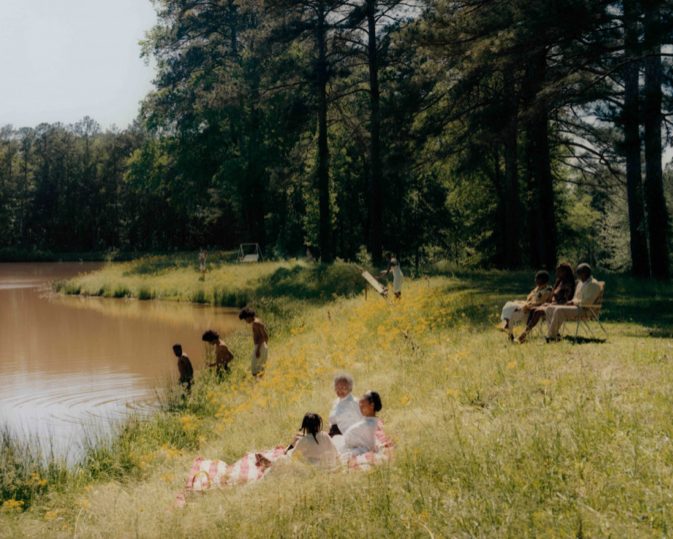
Tyler Mitchell: Wish This Was Real
MEP, Paris
15 October 2025 to 25 January 2026.
The first solo exhibition in France of Tyler Mitchell, a key figure of the new generation of American photographers. The show draws on ten years of his work:photography, video, even sculptural prints. Through lush pastoral scenes and re-imagined everyday life, the exhibition conjures spaces of possibility, resistance, and re-definition of identity, countering the flattening logic of homogenised representations. It is a photographic architecture that resists chaos, not by overwhelming but by gentleness, dignity, and re-imagined belonging.
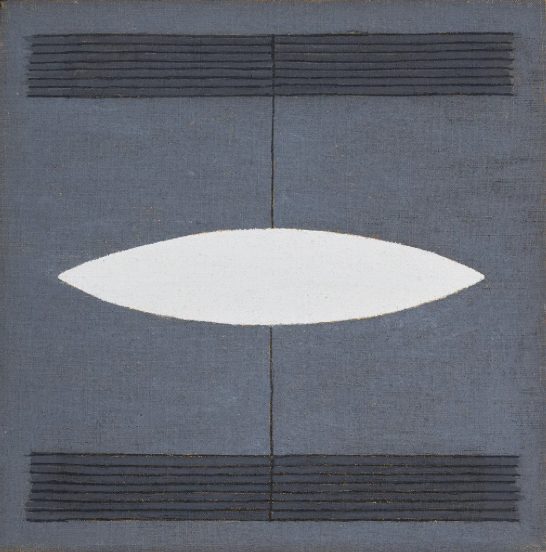
Minimal
Bourse de Commerce
8 October 2025 to 19 January 2026.
In a world saturated by spectacle, digital noise, endless information, Minimalism’s ethos of economy of means, focus on materiality, space, light, and absence becomes a political act. The exhibition demands patience, attention, and presence. It offers a counter-algorithm to chaos by privileging subtraction over accumulation, silence over overload. The exhibition’s emphasis on slow looking, subtle shifts, material presence, invites the viewer to slow down, to inhabit time differently.
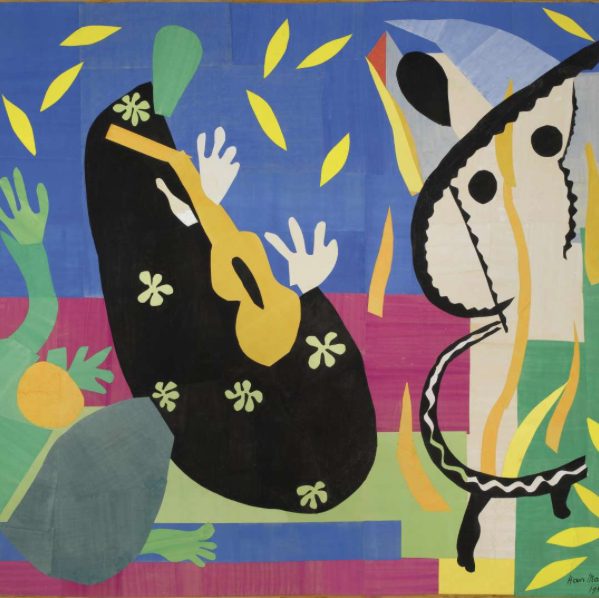
Matisse: La couleur sans limite
Grand Palais
24 March – 2 August 2026.
Matisse’s radical relationship to colour feels uncannily suited to our moment. His chromatic expansiveness wasn’t just aesthetic: it was a philosophical stance, a challenge to constraint. In 2026, seeing these works gathered together reads almost as a counter-coda to the grey, crisis-tinted mood of the present. Here, colour becomes a politics of openness: space expanding rather than contracting, sensation defying the pressure to flatten.
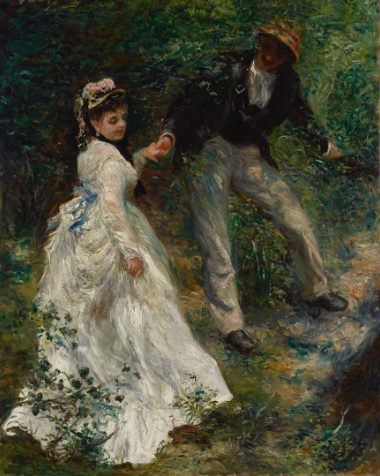
Renoir and Love
Musée d’Orsay
7 March – 19 July 2026.
This major retrospective gathers some of Pierre-Auguste Renoir’s masterpieces, many rarely shown together, to reflect on love, intimacy, human relationships. In a time saturated by global
crises and social fragmentation, such a show offers a pause for tenderness, connection, and emotional depth.
LONDON
Giacometti x Mona Hatoum
Barbican Art Gallery
London 3 September 2025 – 11 January 2026.
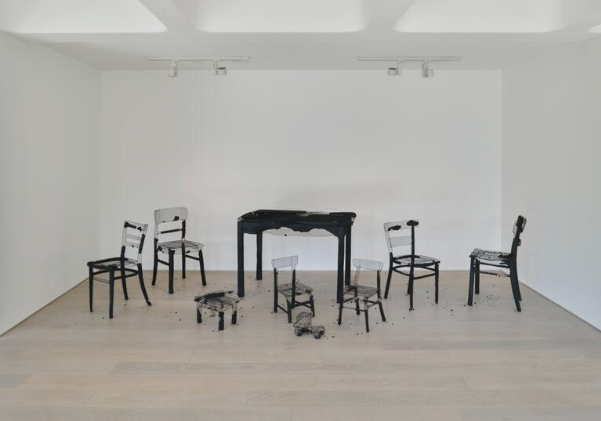
Hatoum’s work often explores the architecture of violence: political, social or spatial and the fragility or precarity of human existence. In this show, by juxtaposing Giacometti’s existential sculptural legacy with Hatoum’s contemporary, politically charged installations, the exhibition
becomes a space for reflection on history, memory, conflict, and resilience. It’s not just formal: it’s a confrontation with displacement, loss, and the conditions of survival in a chaotic world.
Nigerian Modernism
Tate Modern, London
8 October 2025 until May 2026.
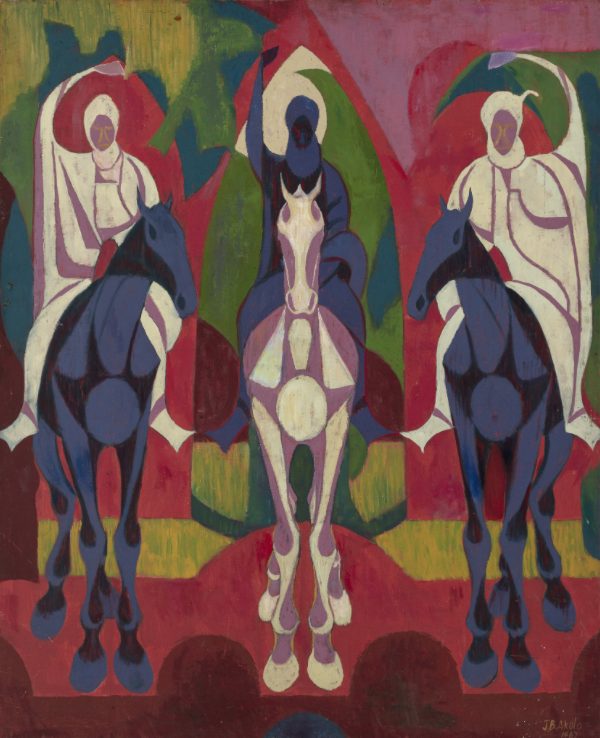
This major exhibition explores the development of modern art in Nigeria — over 50 artists, more than 250 works spanning different generations and movements. The show explicitly re-centres non-Western art histories, challenging Eurocentric narratives and canonical canons. In doing so, it reconfigures memory, identity, and global art genealogies, making visible what was suppressed or marginalised. For a politics-of-chaos sensibility, this kind of decolonial reorientation is both urgent and radical.
Yin Xiuzhen: Heart to Heart
Hayward Gallery
17 February – 3 May 2026
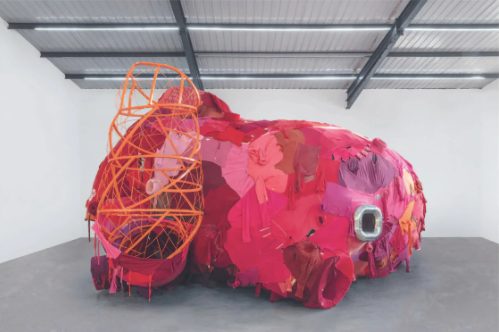
The exhibition presents works by the contemporary Chinese artist Yin Xiuzhen, whose practice often reflects on globalisation, migration, displacement, memory, and material fragility (clothing, textiles, found objects, ephemeral materials). In a world shaped by displacement, climate crisis, migration and social rupture, Yin’s work – often fragile, scarred, poetic – offers a form of
memory-work and resistance. As exhibition architecture, this could act as a subtle counterpoint to spectacle: inviting reflection, vulnerability, and attentiveness to material histories and global entanglements.