
Opening image En Zhi Khoo Tailored through time.
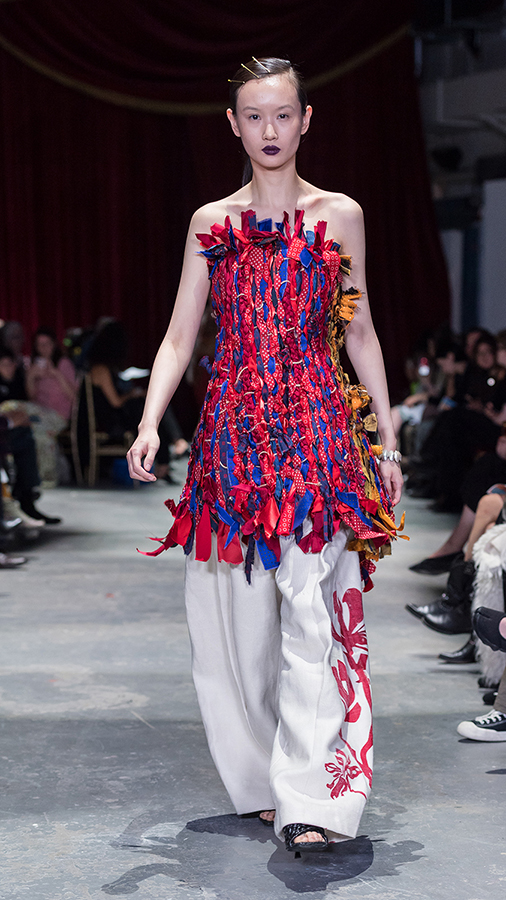
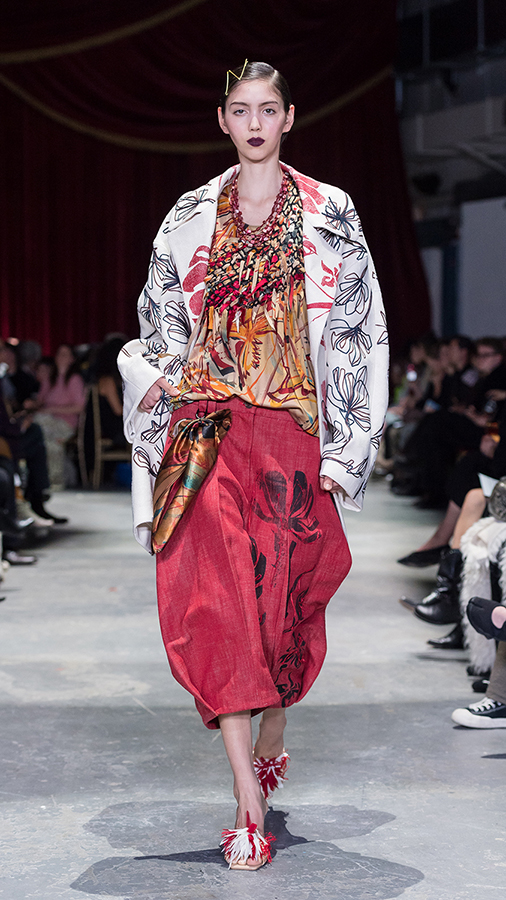
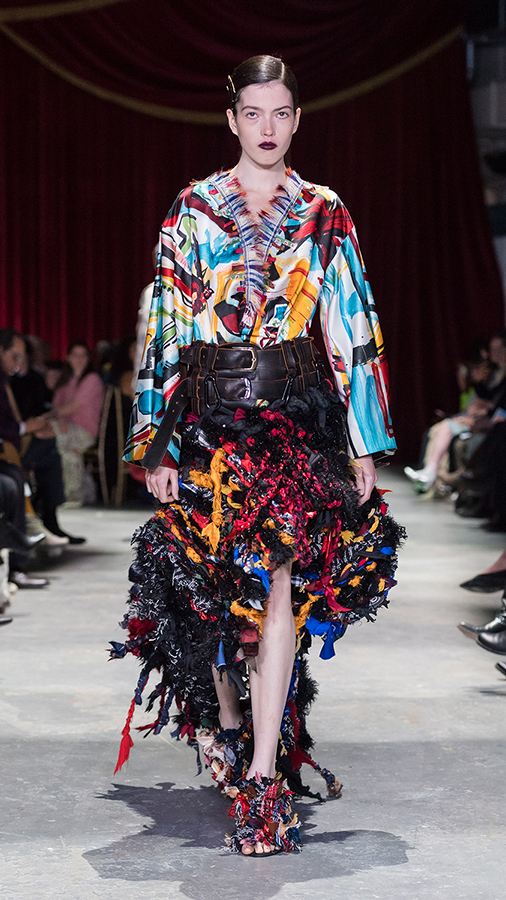
Inherited memories, fleeting gestures, forgotten histories, subcultures, rituals, landscapes and notions of home all surfaced in this year’s University of Westminster BA Graduate Show. Across womenswear and menswear, designers drew on personal histories, cultural references and everyday observations to create collections that felt thoughtful, individual and assured. Rather than following a single mood or aesthetic, the work reflected a broad range of perspectives, each expressed with confidence and conviction.
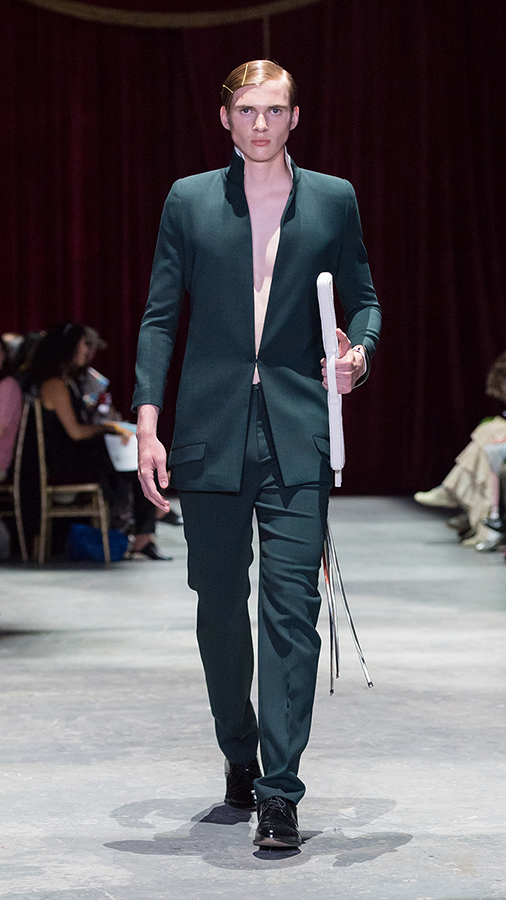
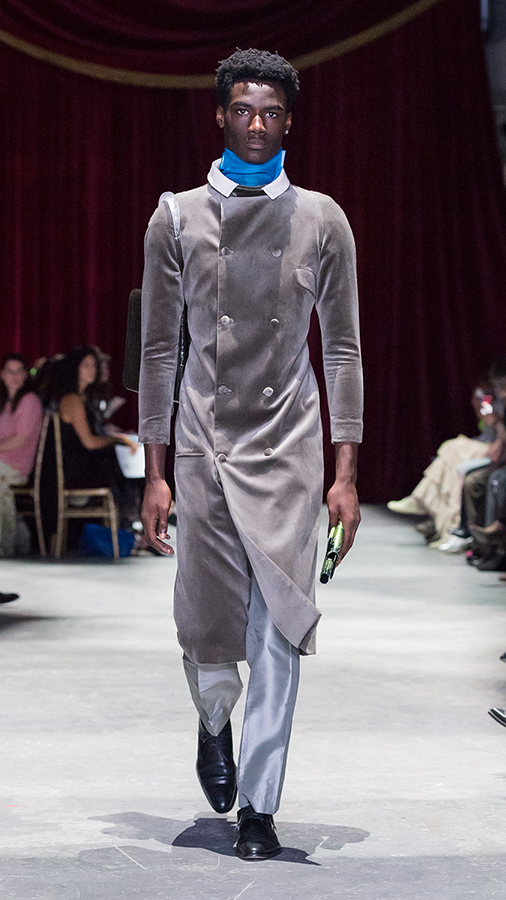
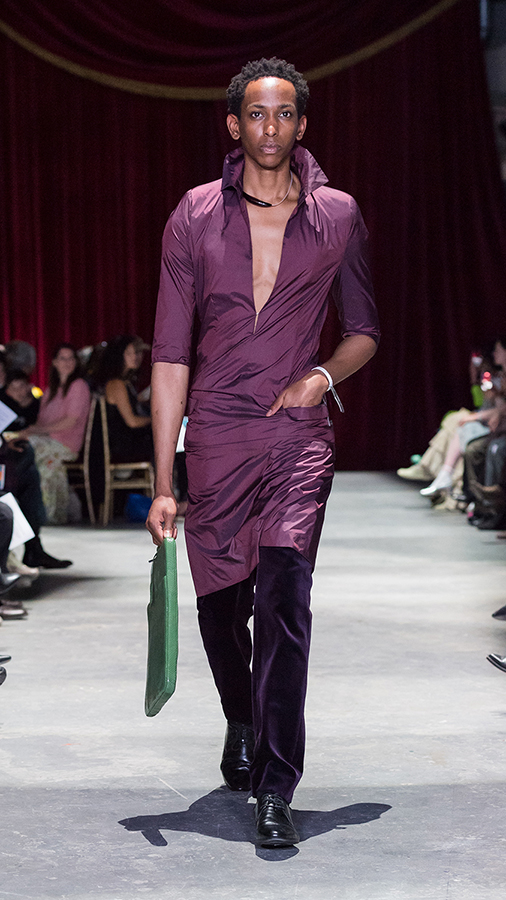
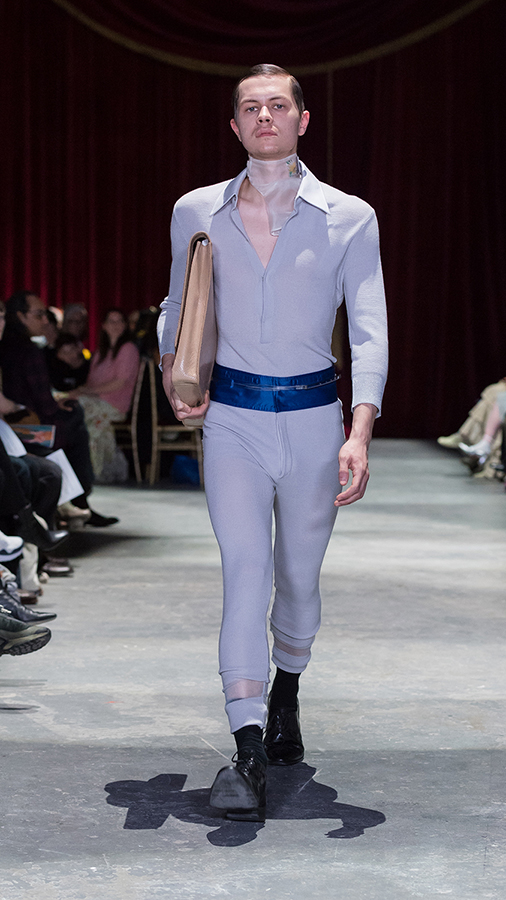
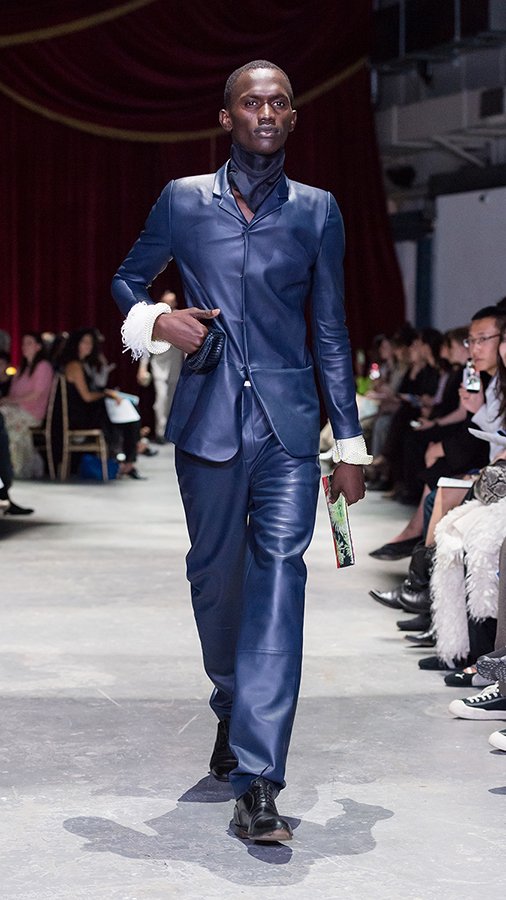
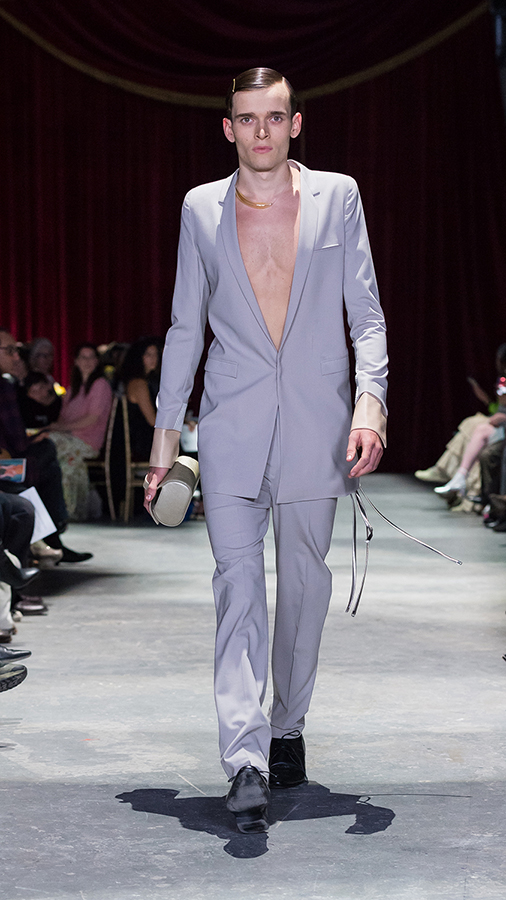
Qihui Ye Ensembles
Challenging conventional notions of masculine identity through a restrained and precise visual language, Qihui creates a singular, sleek, contemporary collection. Drawing inspiration from the elegance of 50s and 60s style icons such as Grace Kelly and Jackie Kennedy, he also references contemporary furniture and interior design. This thoughtful, refined and subversive statement holds many subtle surprises.
Leather, technical fabrics and fine engineered knits are contrasted with handwoven cuffs, floral prints layered over metal chains and glass bangles. Bags re-interpret the proportions and materials of traditional laptop cases transforming them into infinitely covetable, gender-neutral accessories to complete this unique statement.
Aliyah Dankwah In Tension
Investigating the balance between structure and fluidity, Aliyah Dankwah’s striking womenswear draws many references from her heritage – particularly the Ghanaian smock, which has informed the creation of this sculptural, contemporary womenswear collection. Clear, bold blocks of colour reflect Ghanaian sensibilities, where tones stand side by side providing drama and contrast.
The loom and the weaving process have influenced the unconventional layered silhouettes. London life provides an exciting cultural clash, with structured outerwear nonchalantly worn, and softened with supple leather ties, reflecting co-existence and connection.
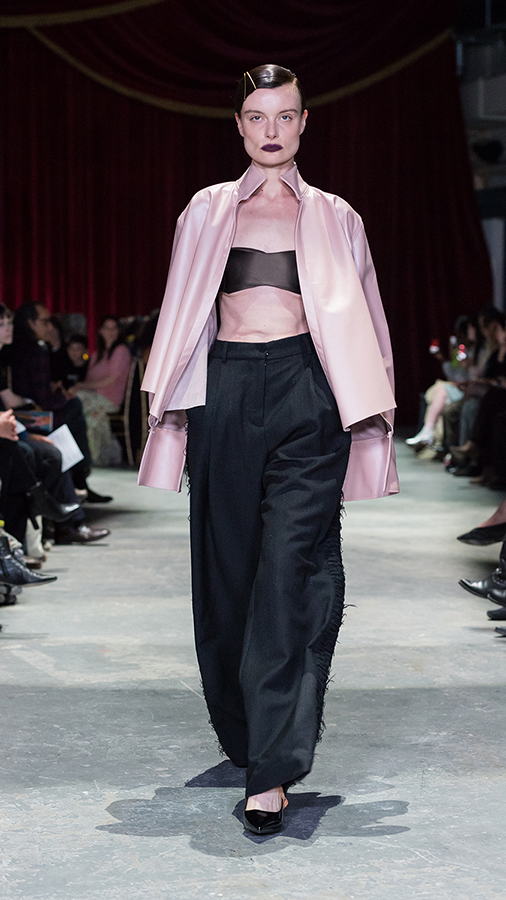
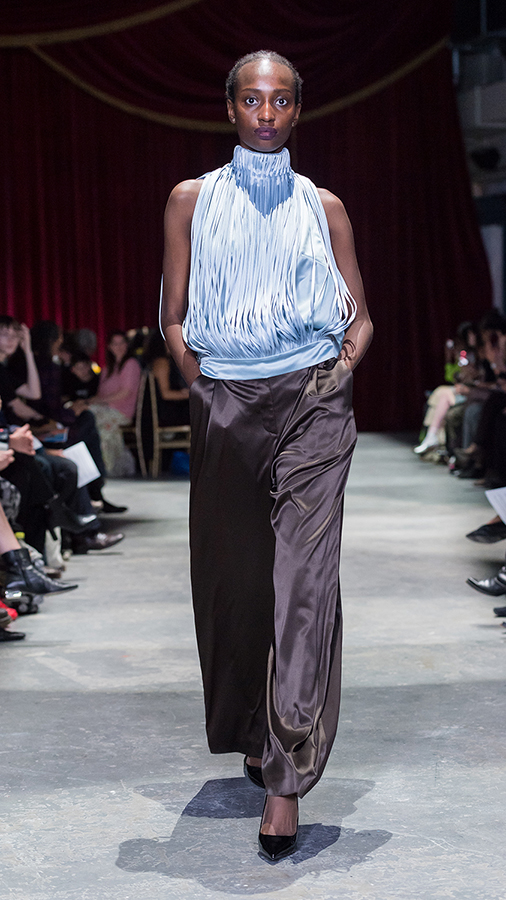
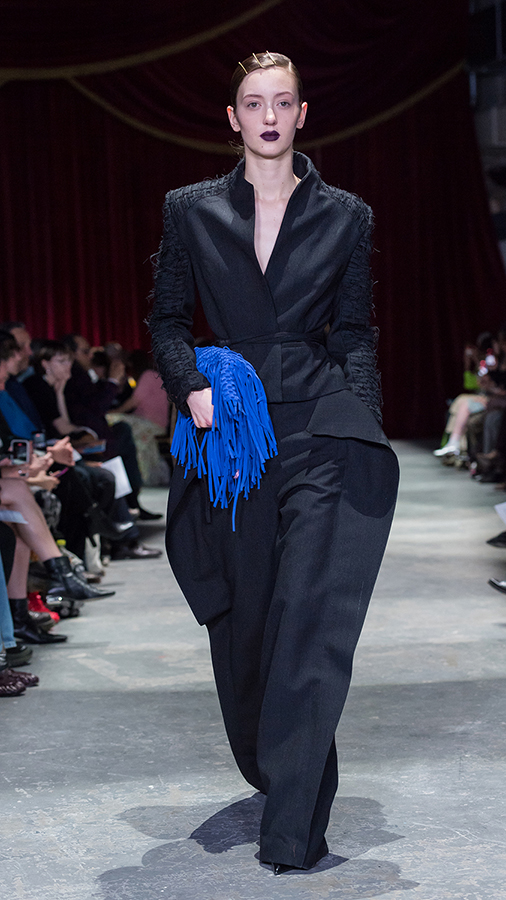
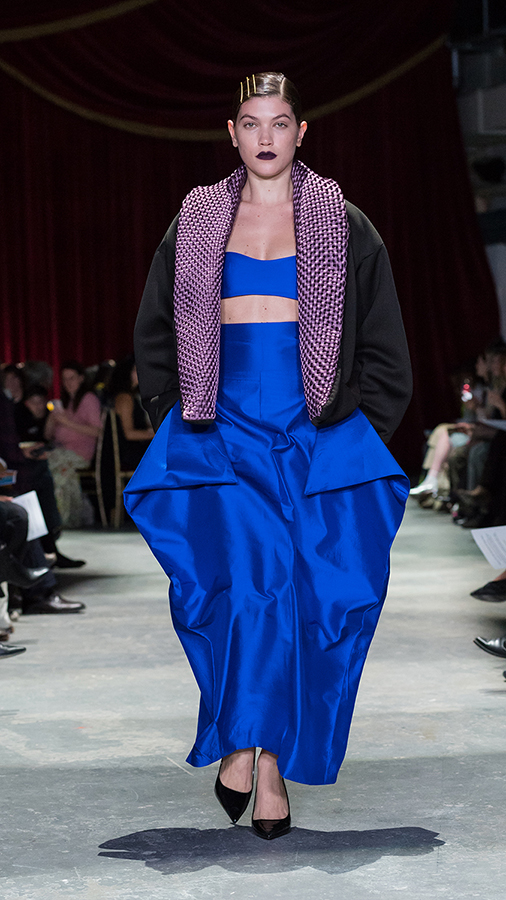
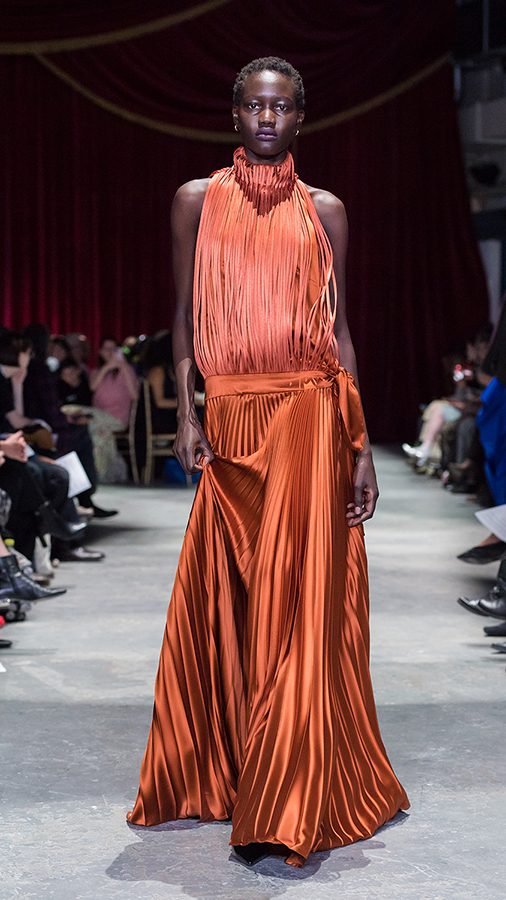
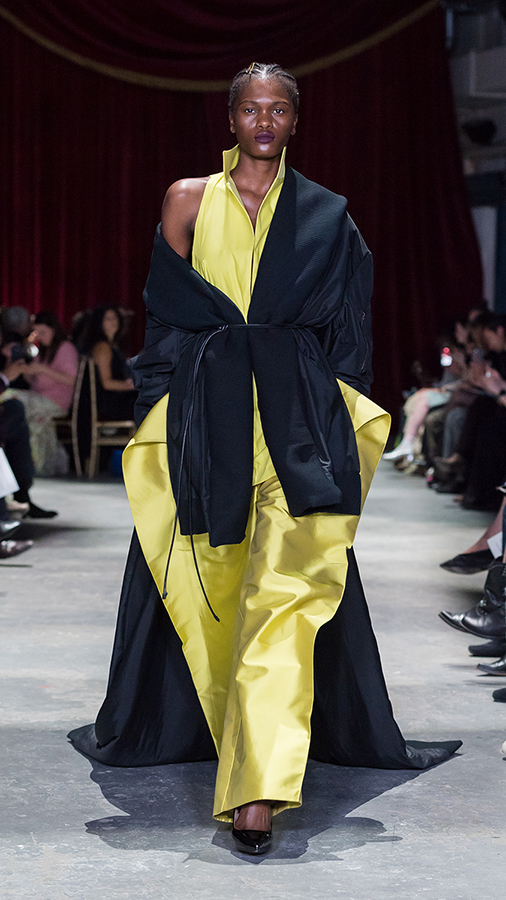
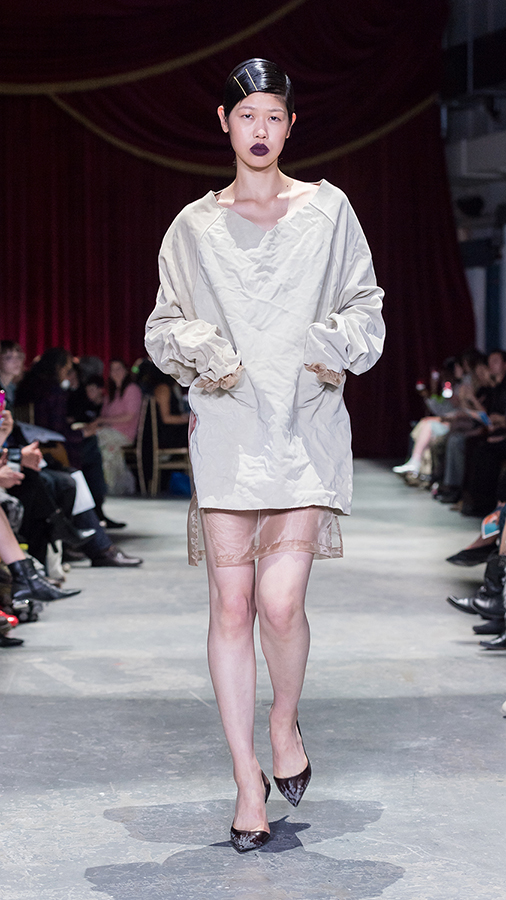
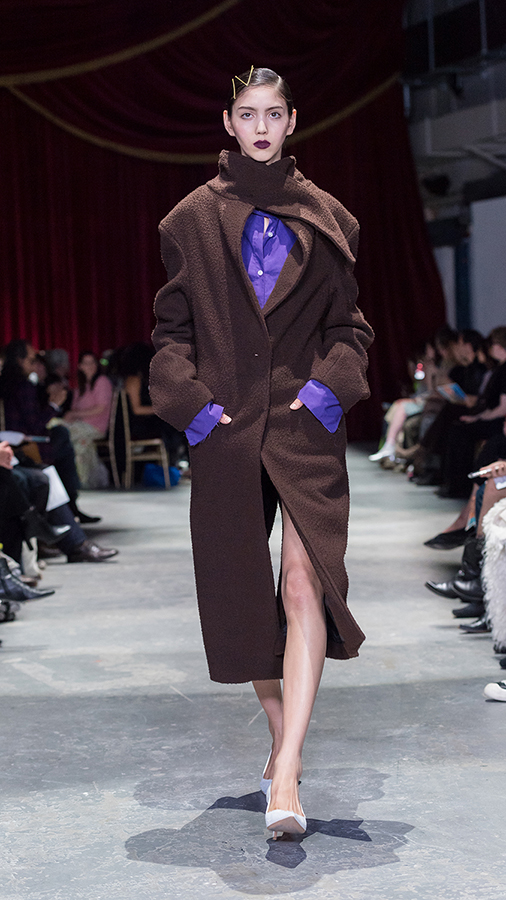
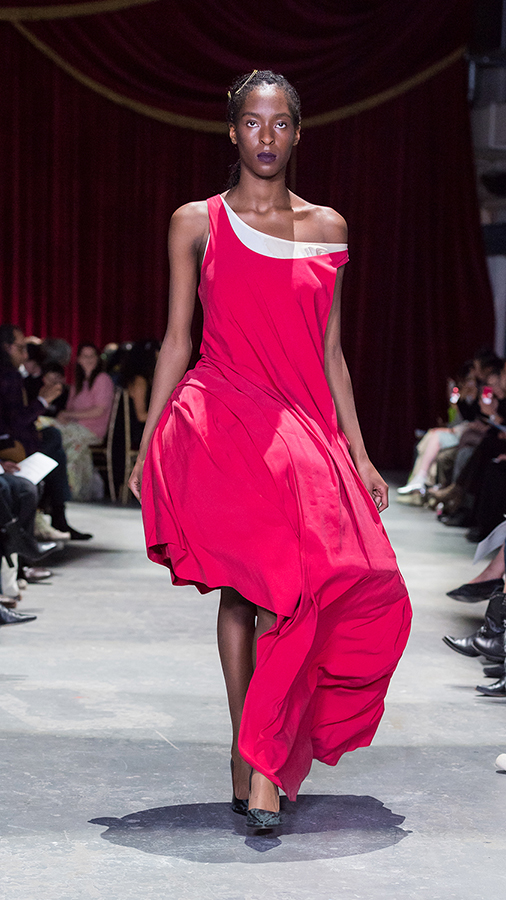
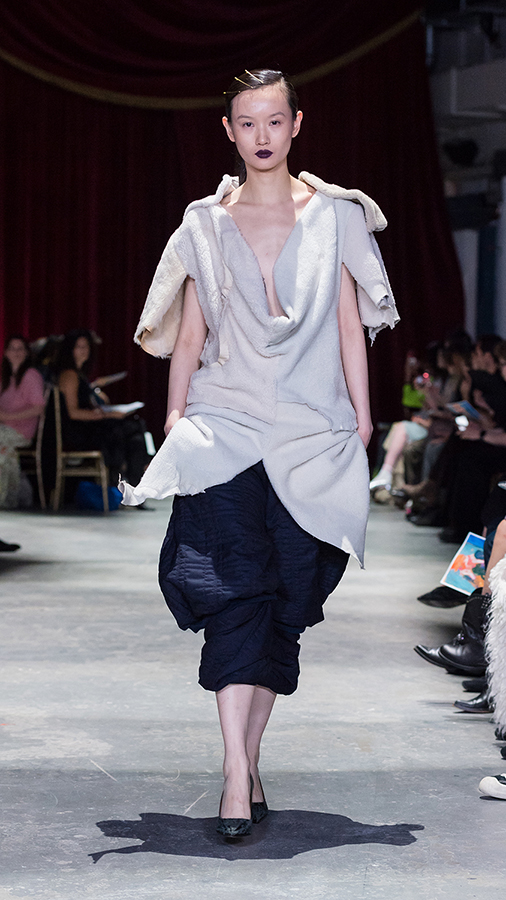
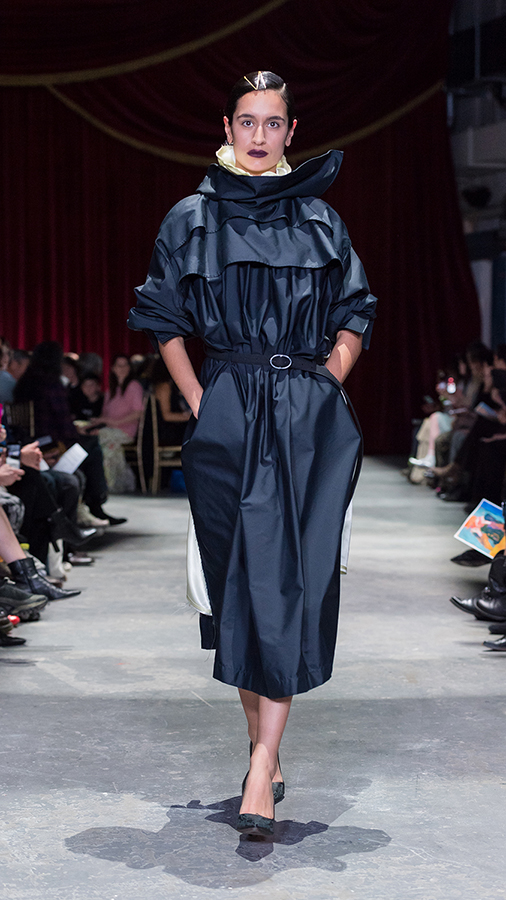
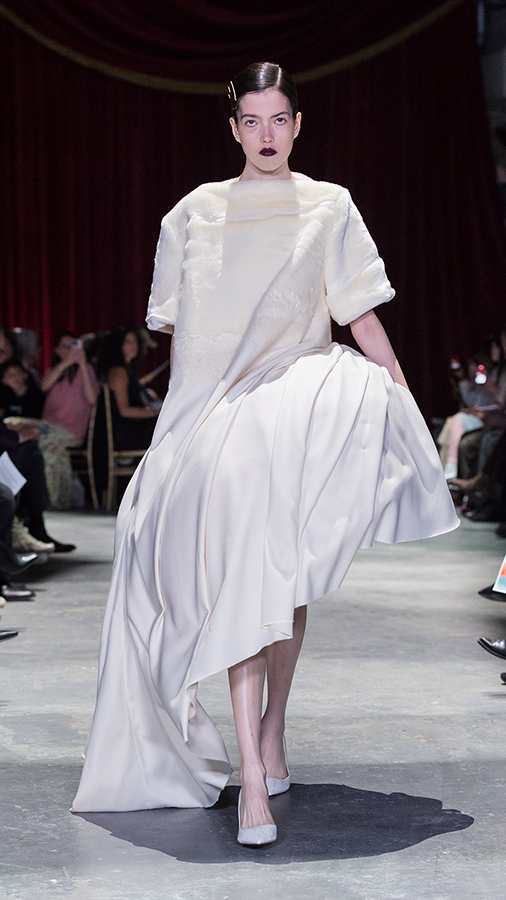
Leqi Zeng In Between Gestures
Celebrating imperfection and the unexpected, Leqi Zeng’s refined and thoughtful womenswear is a study of effortless disorder. The oversized, the undone and the unintentional is transformed into relaxed yet powerful contemporary elegance. Leqi’s keen observations of women in daily life, highlight fleeting moments such as skirts lifted by a breeze, oversized coats with exposed linings, broken heels, cropped trousers and the character of worn leather. Translating the mundane, her clever, modern pieces are shaped through movement, imbalance, and personal adjustments. Moments shaped not by departure or arrival, but by what happens in between.
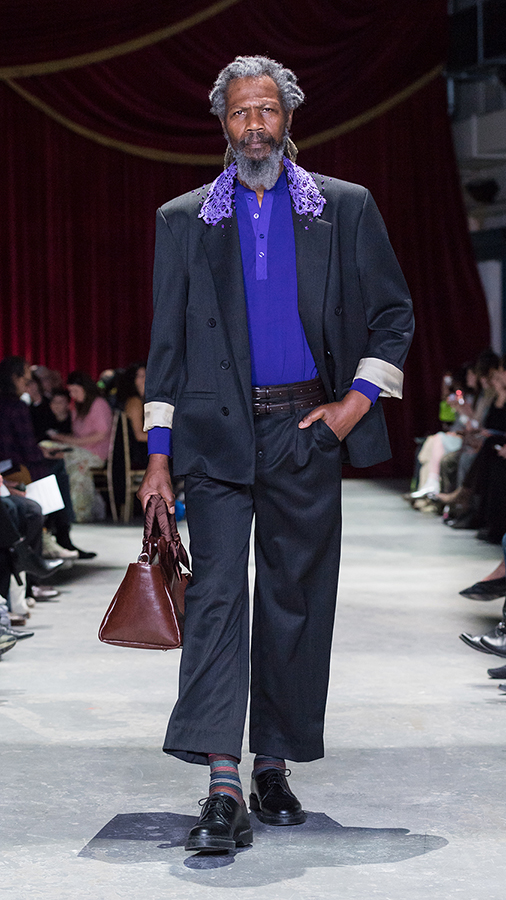
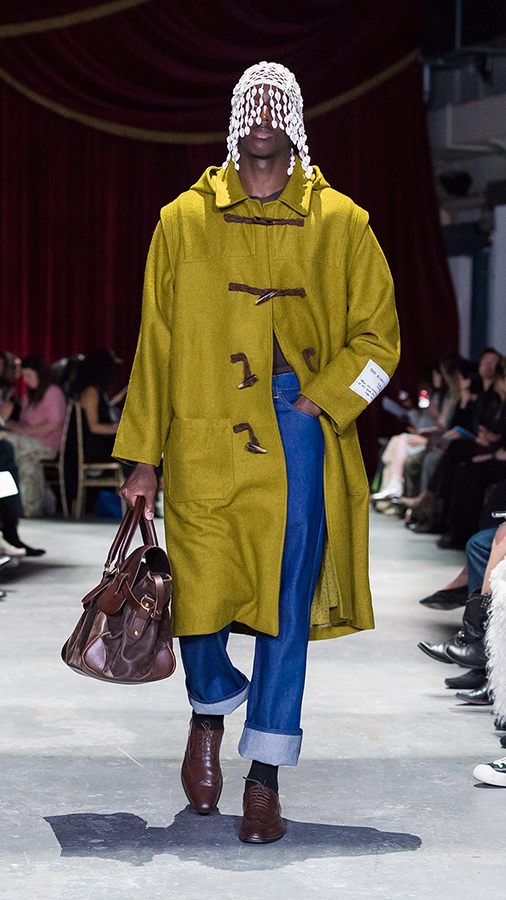
Rachael Adegoke Bridging Aso
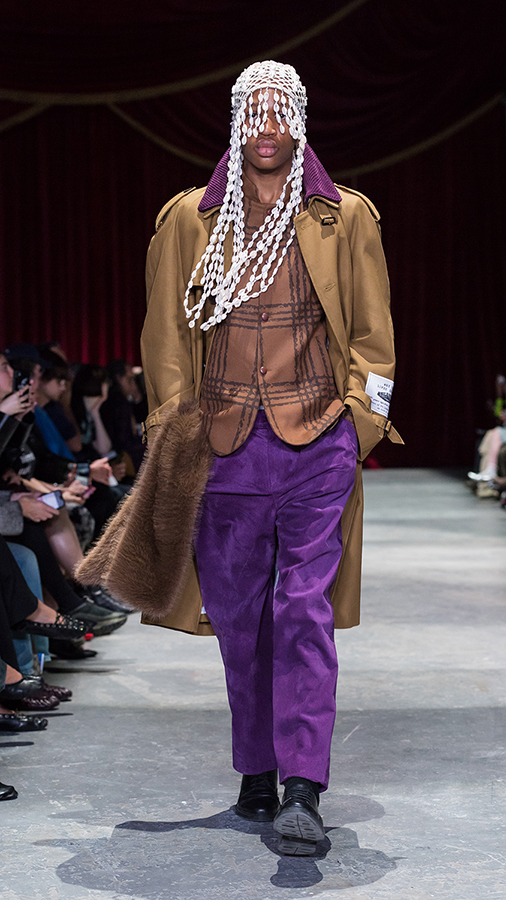
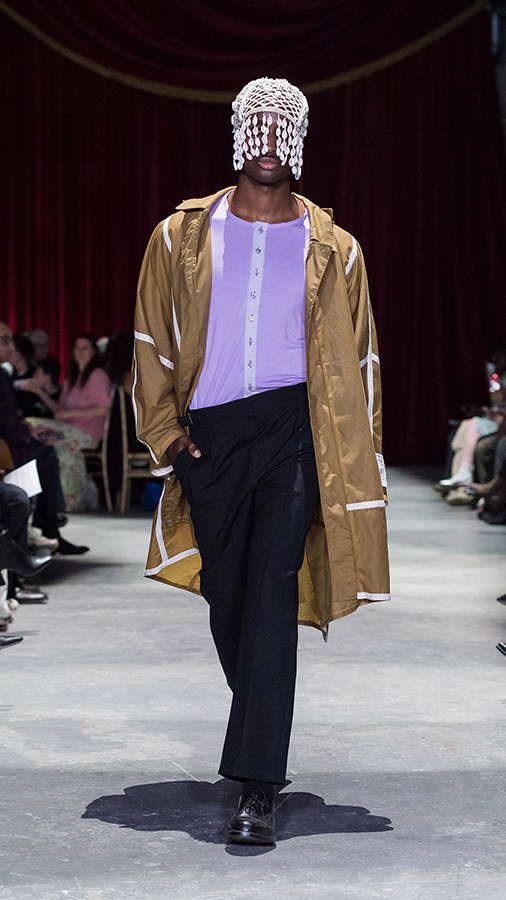
Rachael Adegoke fuses the vibrant culture and material language of her Nigerian heritage with the tailoring codes of British menswear tailoring in this exciting collection. Creating a fresh dialogue around Black dandyism, Rachael references
Contemporary Nigerian Art and archival portraits of folk attire contrasting these against relaxed British ‘Henley Regatta’ suiting.
Inspired by Nigerian folk tales that guide, comfort and frighten, cultural expression is translated through layered, tactile expression into pared back, infinitely wearable looks. Referencing the work of Ben Enwonwu and the Zaria Art Society, Rachel creates custom beaded lace embellishments and silhouettes that echo the rhythm and complexity of mid-century Nigerian Art.
Discarded materials are transformed through craftsmanship and care into covetable leather bags creating the final dynamic, cross-cultural link between London and Lagos.
Alex Lyons Modern Ritual
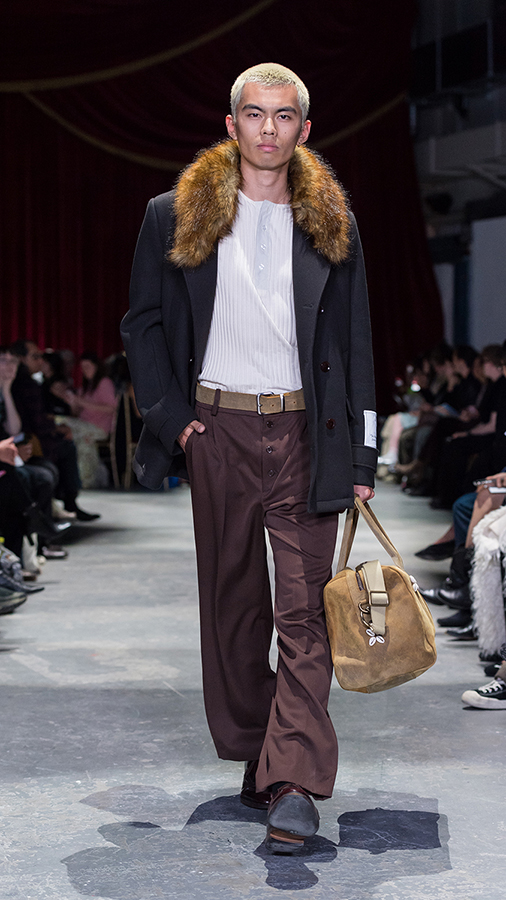
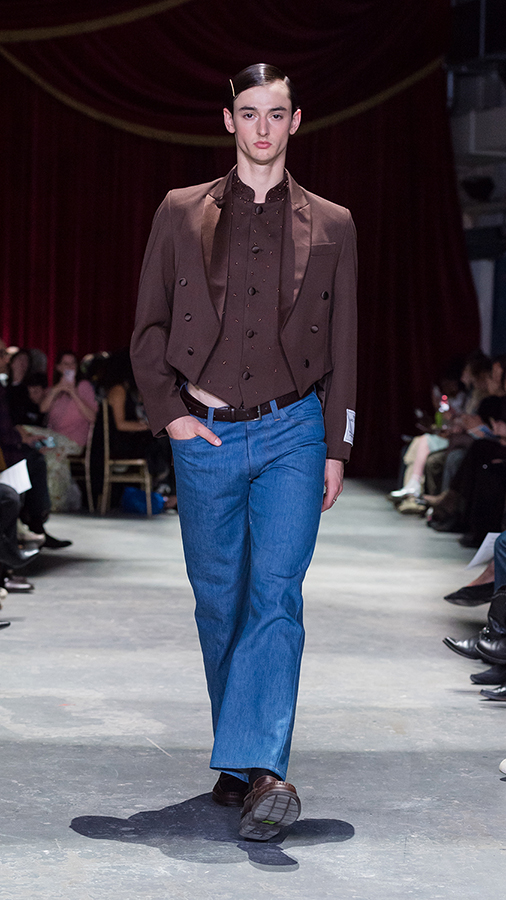
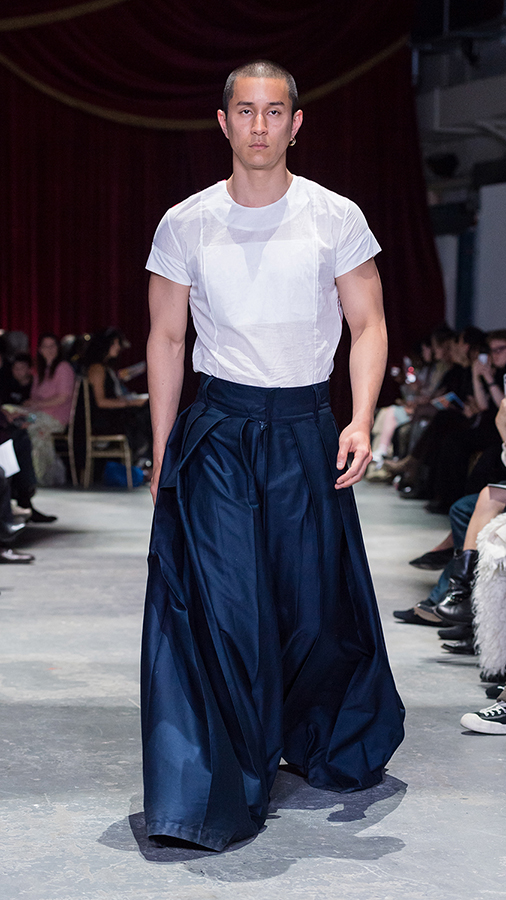
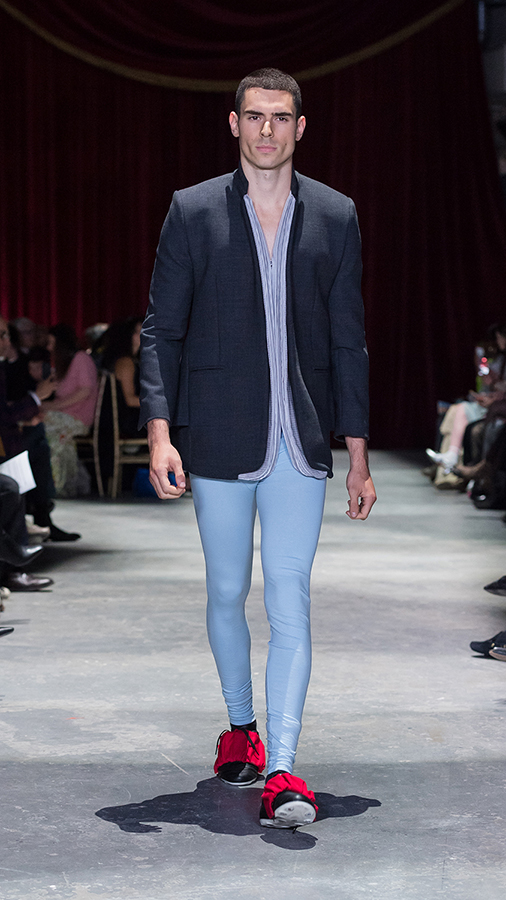
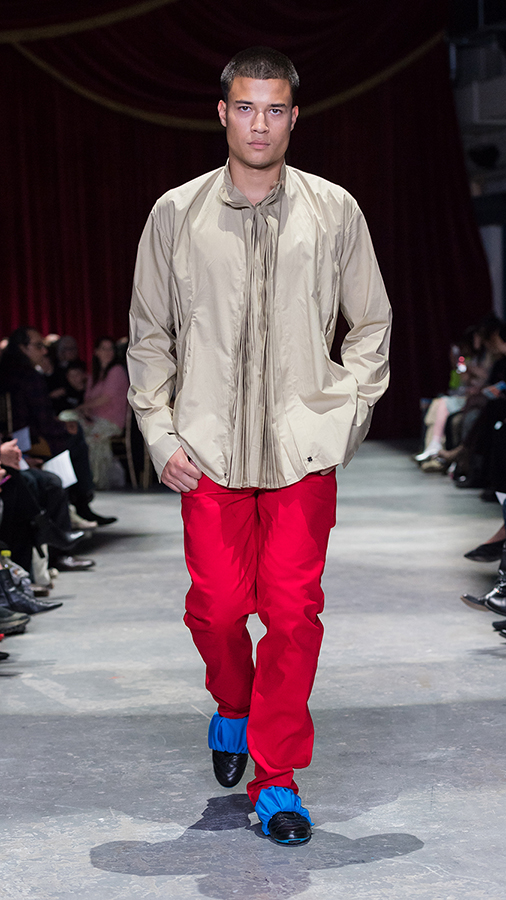
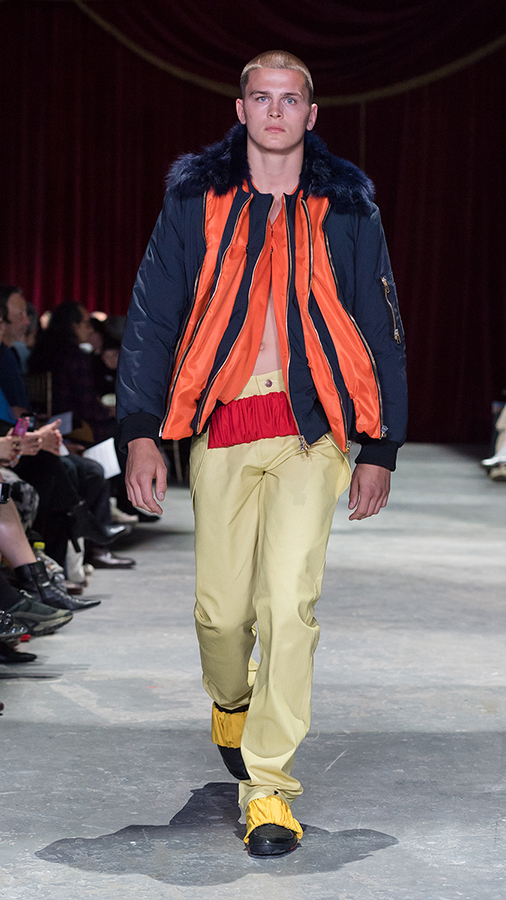
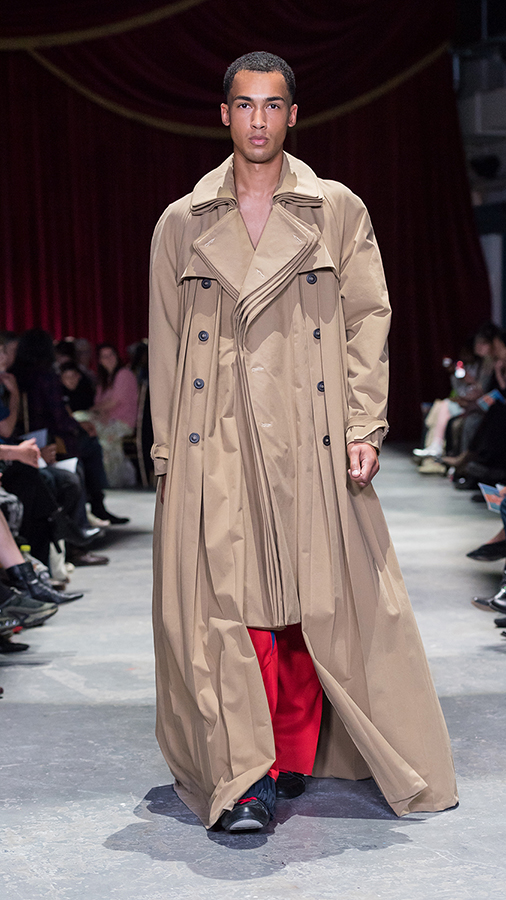
Captivated by Japanese Samurai traditions, Alex Lyons’ creative menswear reflects an imagined journey through the path to mastery. Re-interpreting classic menswear silhouettes through pleating and repetition, his young Samurai muse moves forward in his progress, with each stage depicted in a singular, considered look. Volume is explored in many ways, with extravagant shapes tempered with others reflecting control and discipline.
Other influential references include the postmodern eclecticism of the American artist, Willie Cole. Utilising many donated and deadstock fabrics, sustainability is considered as a moral obligation. The journey to progress involves ritual, tension and discipline, and Alex translates these trials into an experimental, imaginative and contemporary statement.
Georgia Tennant The Entomologists
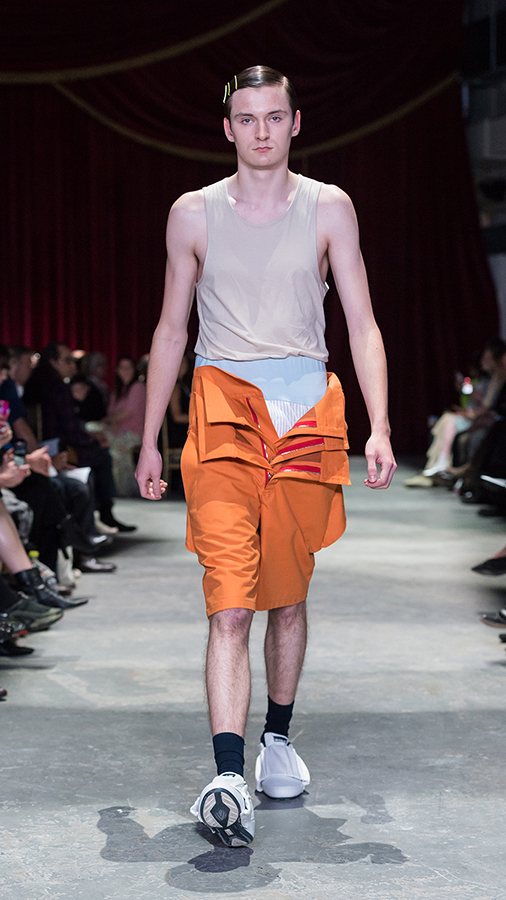
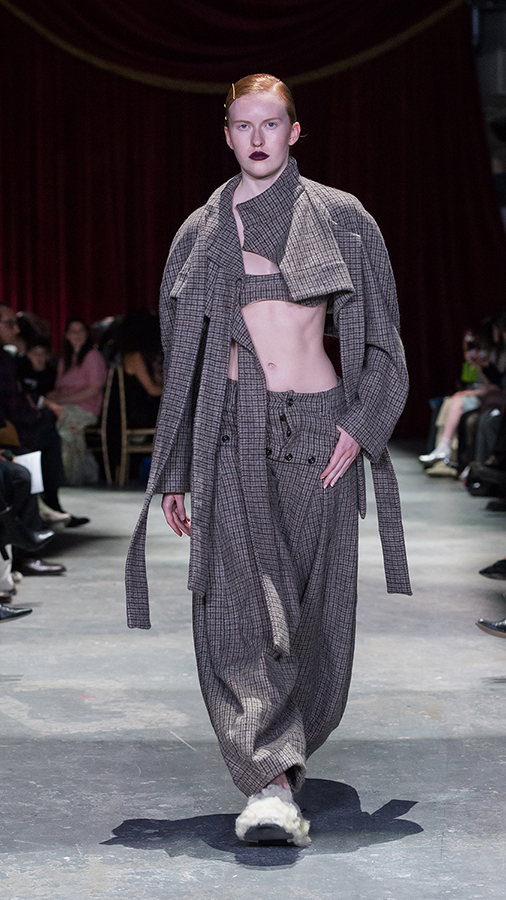
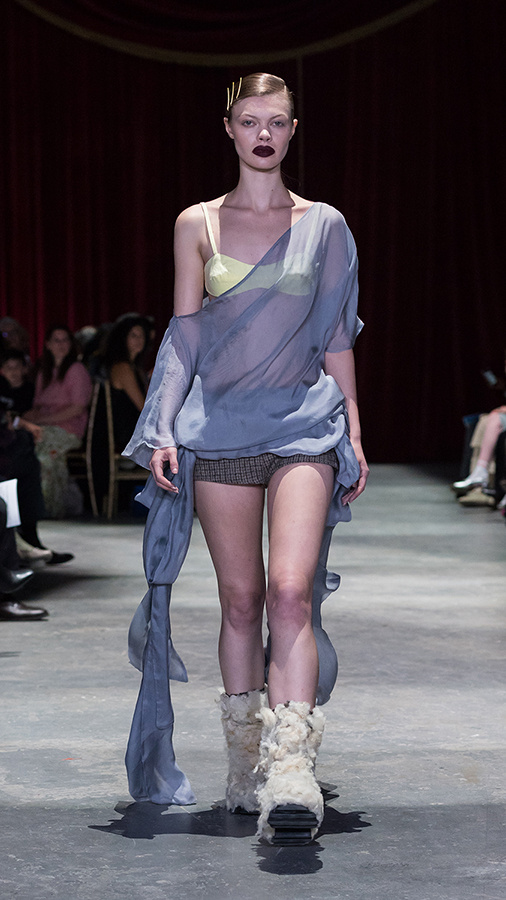
Inspired by the magic and intricacies of entomology, Giorgia’s love of the natural world is long standing and deep-rooted in her psyche. In this beautiful, quirkily cool but uncompromising collection, each element has been meticulously considered with an abiding respect for the impact on the planet. Natural fabrics include donated tweed, spun from Shetland wool and woven in Georgia’s home town of Hawick, Scotland.
Clever, button-off waistbands can be interchanged across looks, allowing the wearer to transform and evolve as they wish. All fabrics, threads and buttons are completely natural, and so the collection is fully compostable. Leftover scraps have been reimagined into accessories to minimise waste. Delicate, hand-dyed colour is derived only from plant-based sources, echoing the soft, shifting light of the wild outdoors.


Kane Chan Vice City
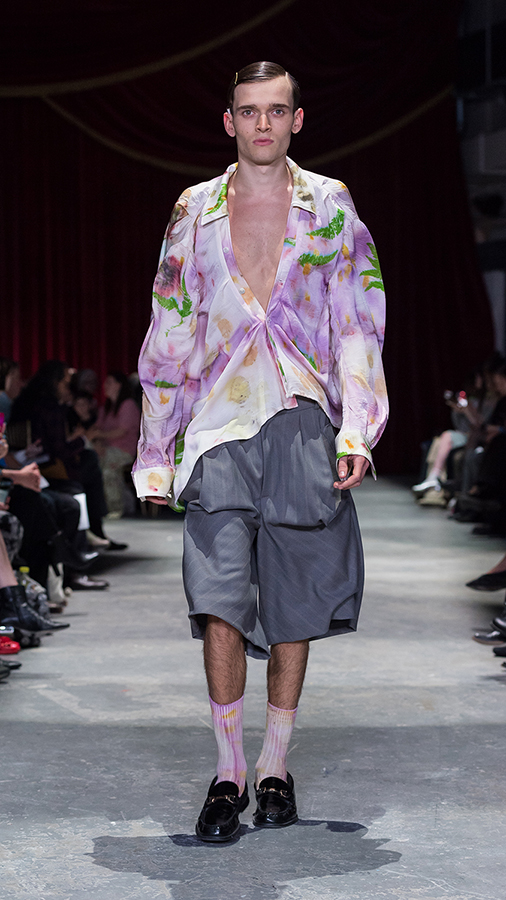
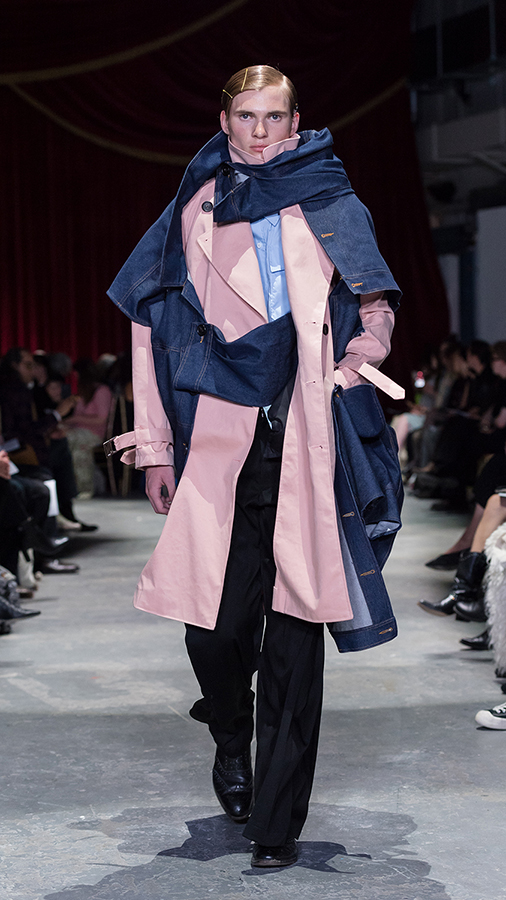
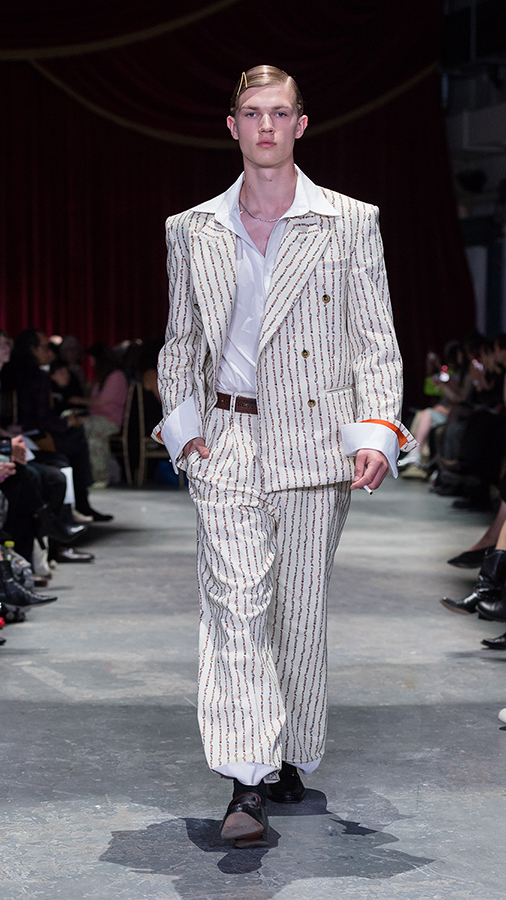
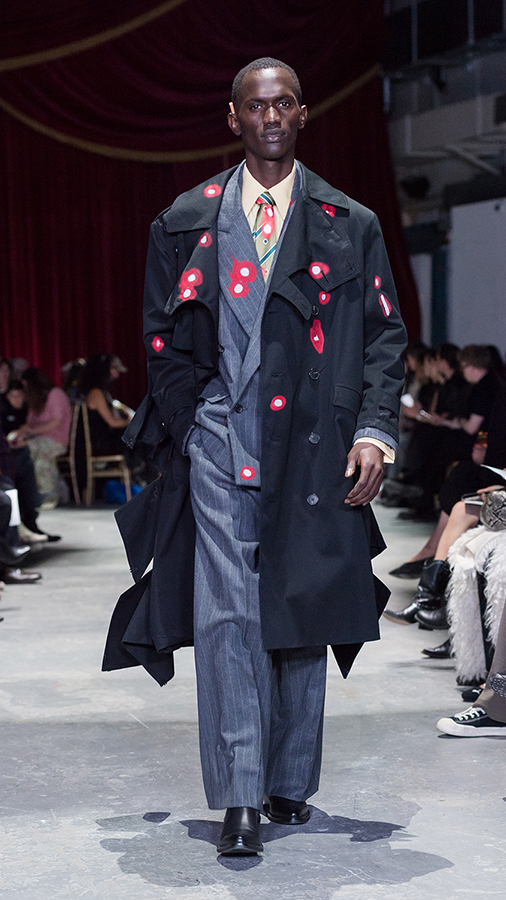
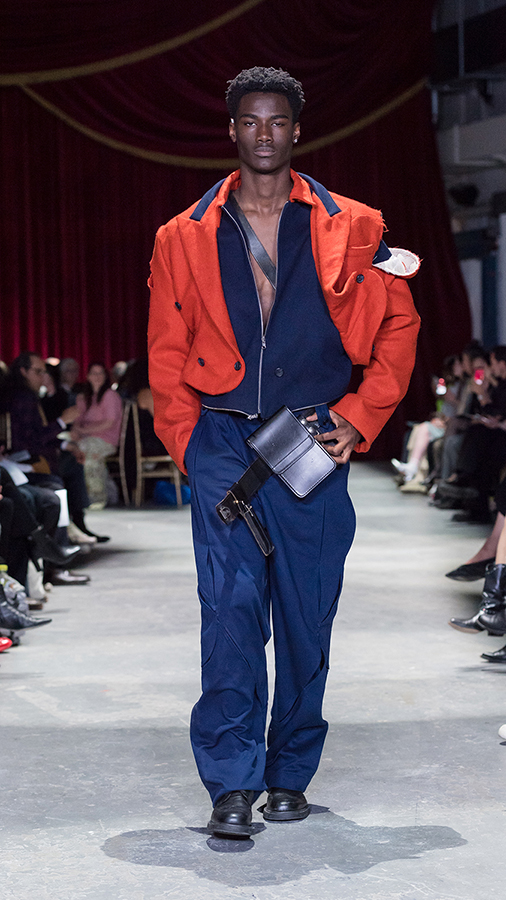
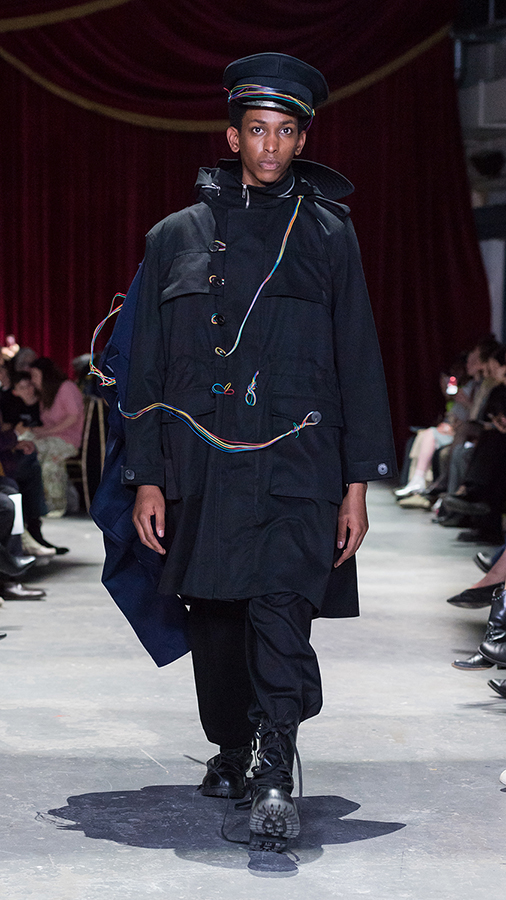
Inspired by classic crime cinema from Hong Kong, Kane Chan uses the anti-hero as his starting point for a unique and quirky take on menswear. Translating the often graphic ‘violence aesthetic’ from films dated between 1980 and 2010, Kane considers both sides of the relentless conflict depicted between police and street gangsters. The drama and destruction depicted in the films is reflected in the fractured and intentionally incomplete garments. Deconstructed power silhouettes are juxtaposed against louche gangster style.
Chaos and conflict are translated into singular looks and the aftermath of violence is seen through dishevelled layers, water drenched prints, and rifle laser-beam motifs.
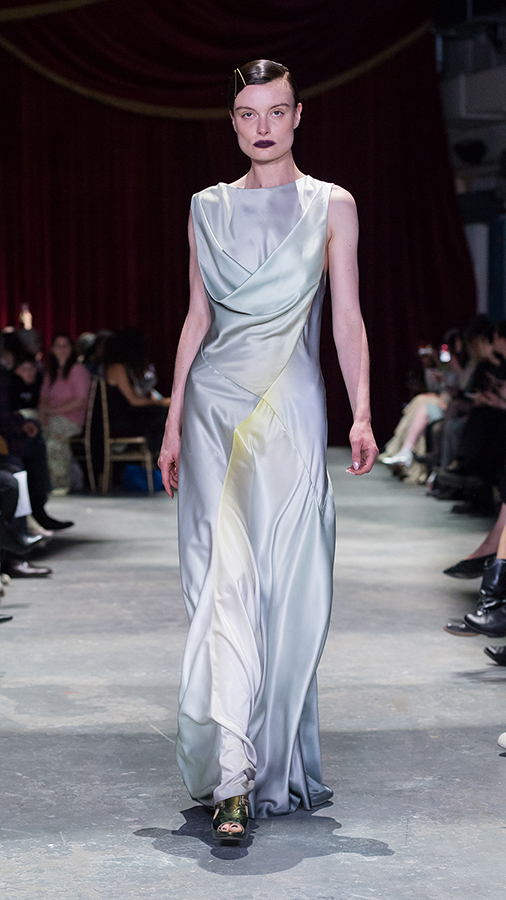
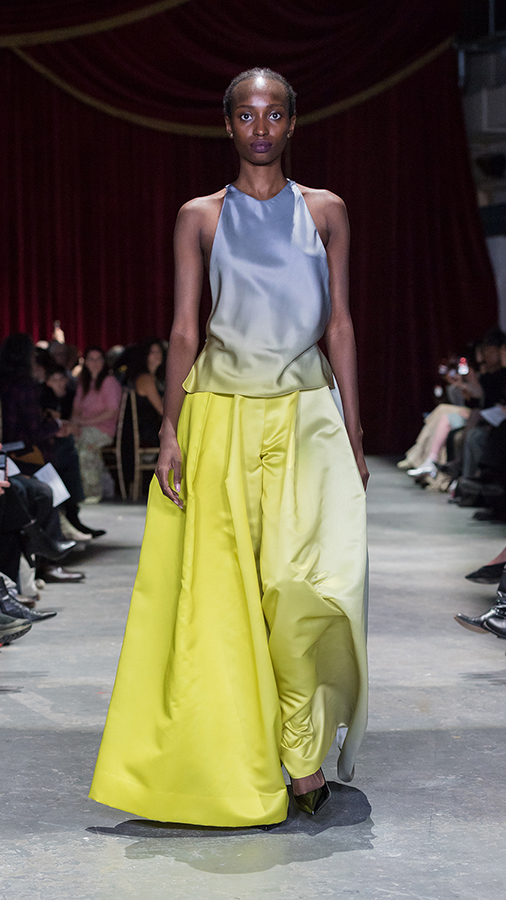
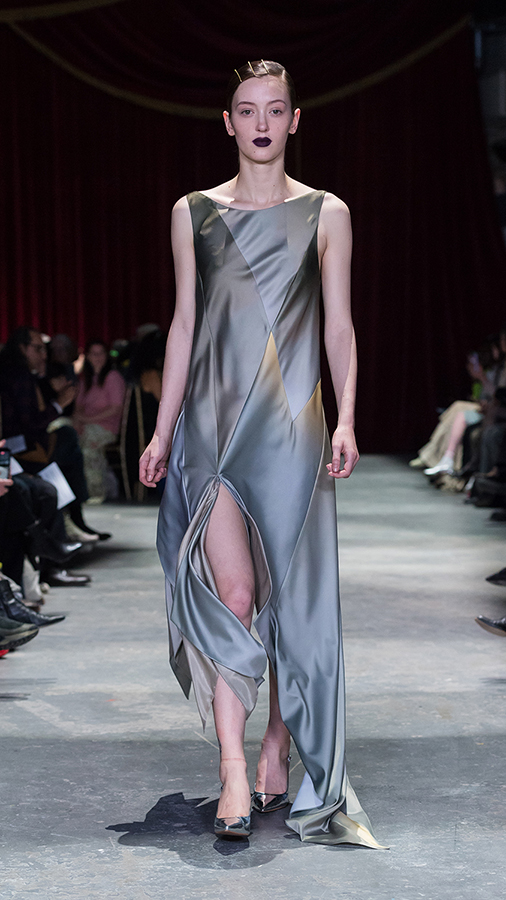
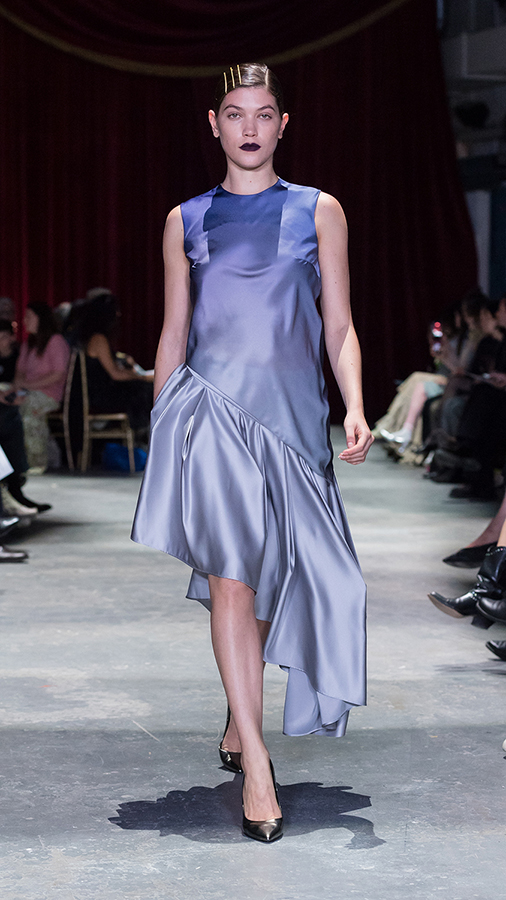
Sumi Kim Cut by Light
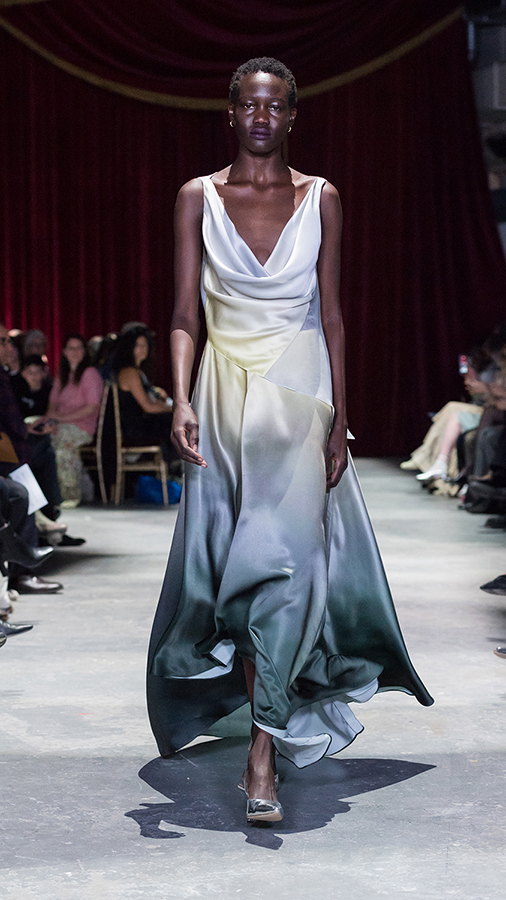
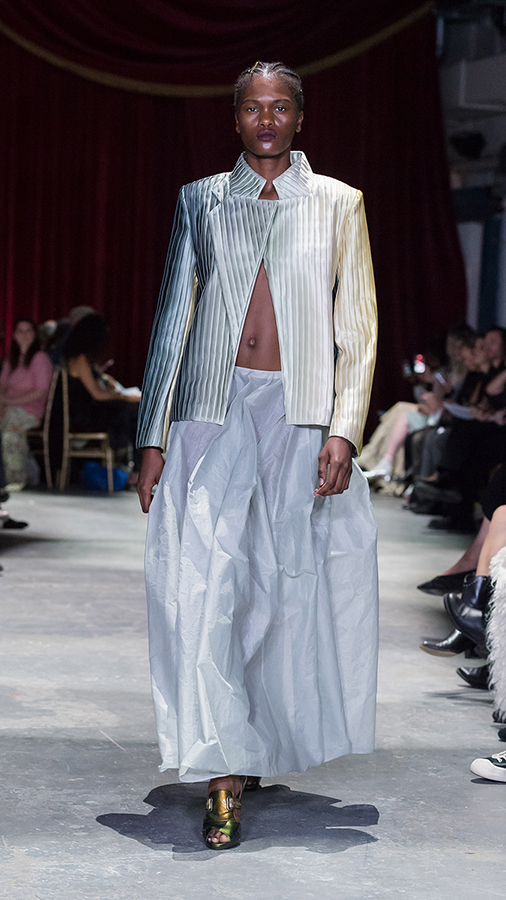
The atmospheric play of natural light is the major inspiration for this beautiful, accomplished womenswear collection from Sumi Kim. Reinventing a golden age of glamour for modern times, Sumi’s pieces focus on the moment light breaks through a window and enters an interior space. Linear rays of sunlight are translated through sharp seam placement and controlled silhouettes, while soft gradients and fluid drape reflect the diffused movement of light across surfaces.
Through a refined use of print, Sumi creates hazy, transient effects that balance softness with precision. Crisp seams contrast with fluid forms, while inventive bias-cut satin and draped silhouettes combine delicacy with structure. The collection explores clarity, atmosphere and movement through the interaction of light, fabric and construction.
Tom Fee ORDER Permits Freedom
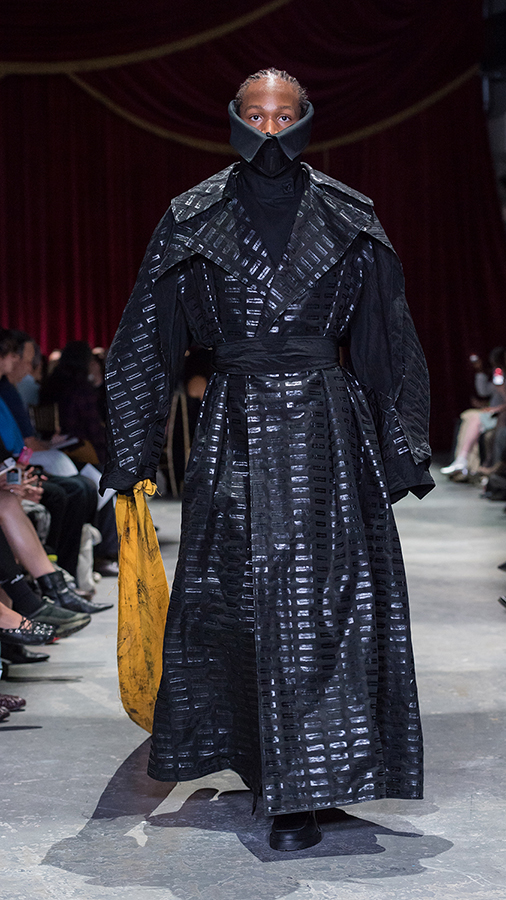
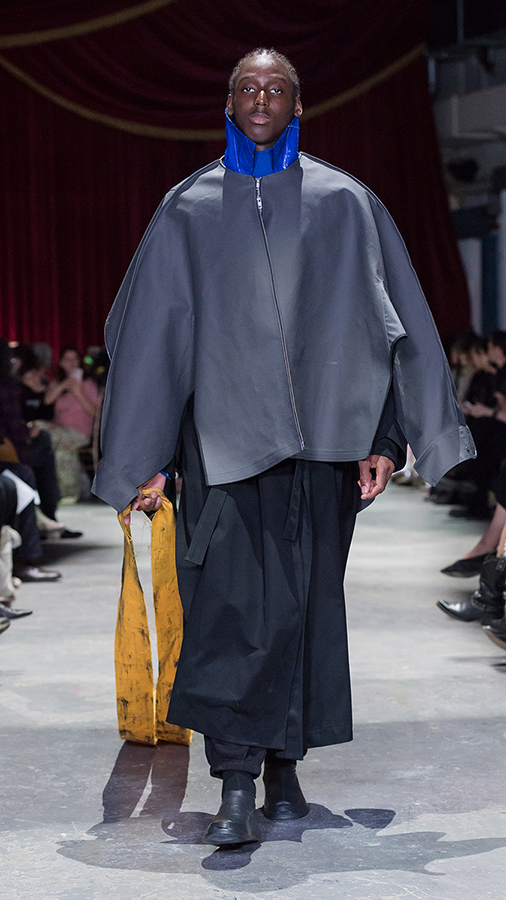
Tom Fee’s menswear collection is an invitation into his personal relationship with ORDER through the framework of a journey taken at night. Opening with darkness and concealment, the six looks are a trajectory from the rigid, opaque and protective towards transparent and exposed. Moving through dark to light, restricted yet nuanced shades of black, blue and white are highlighted with the considered use of reflective details.
Deeply inspired by the work and philosophy of Agnes Martin and the repetitive structures of techno music, the collection functions as an exploration of routine, regulation and self-presentation. Tom interrogates how order and control can operate as tools for freedom, alongside how masking and concealment transform towards visibility, acceptance and release.
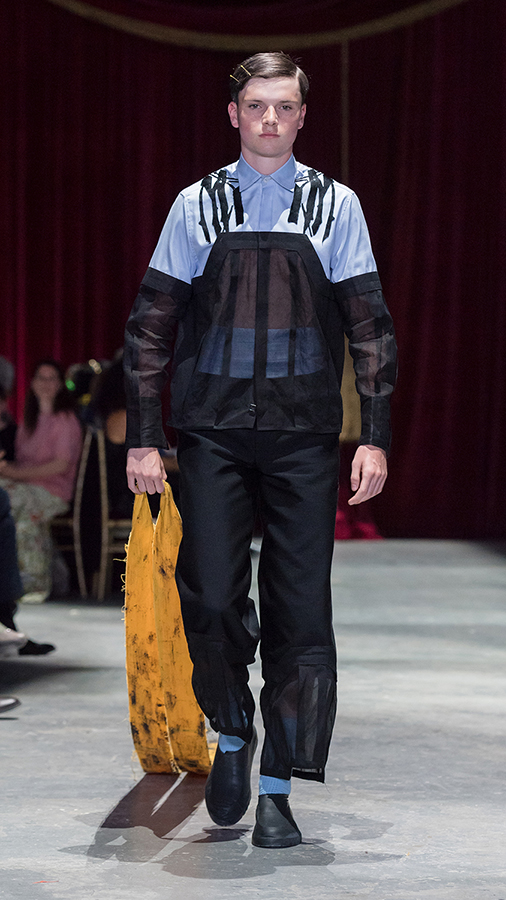
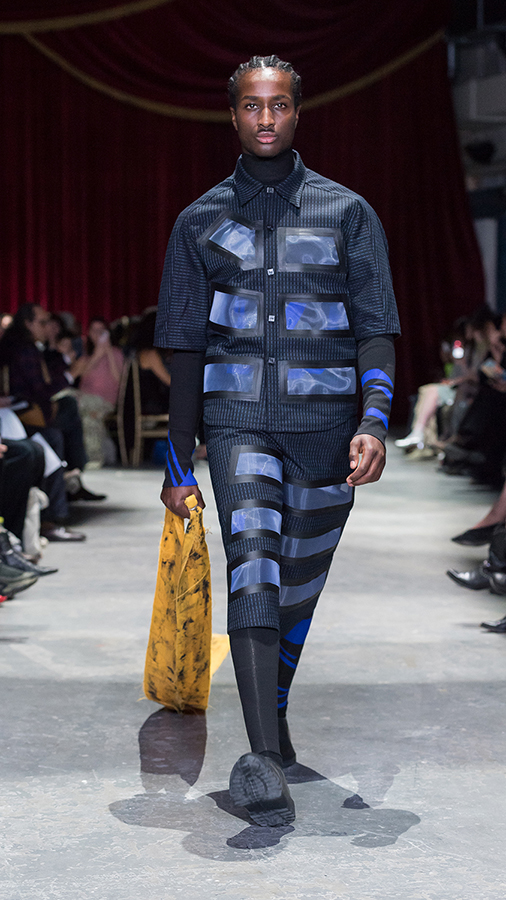
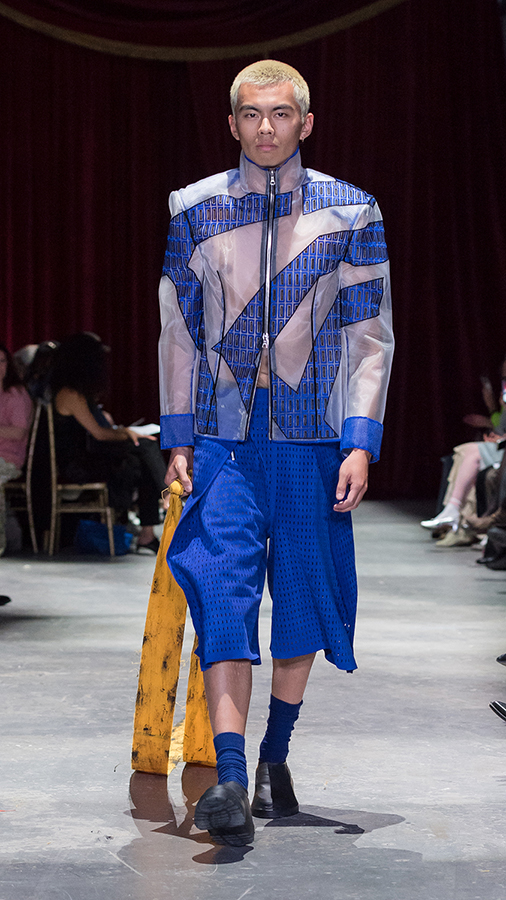
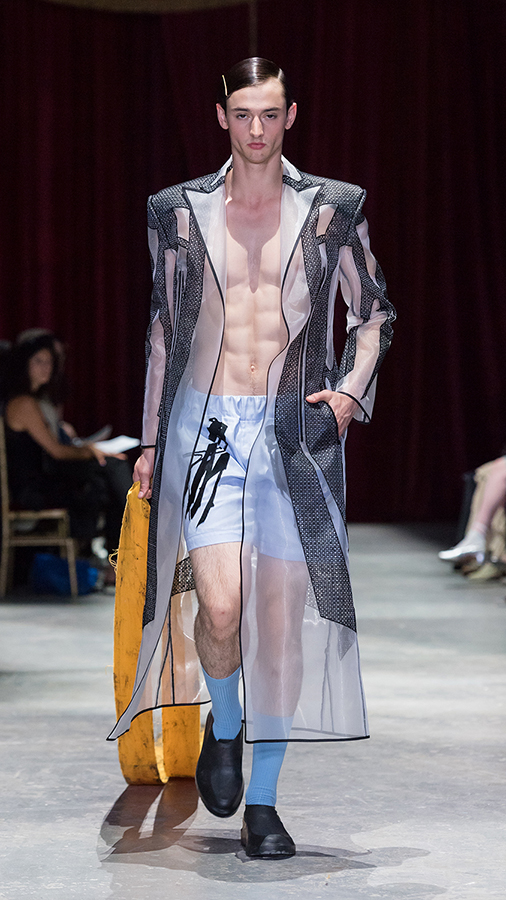
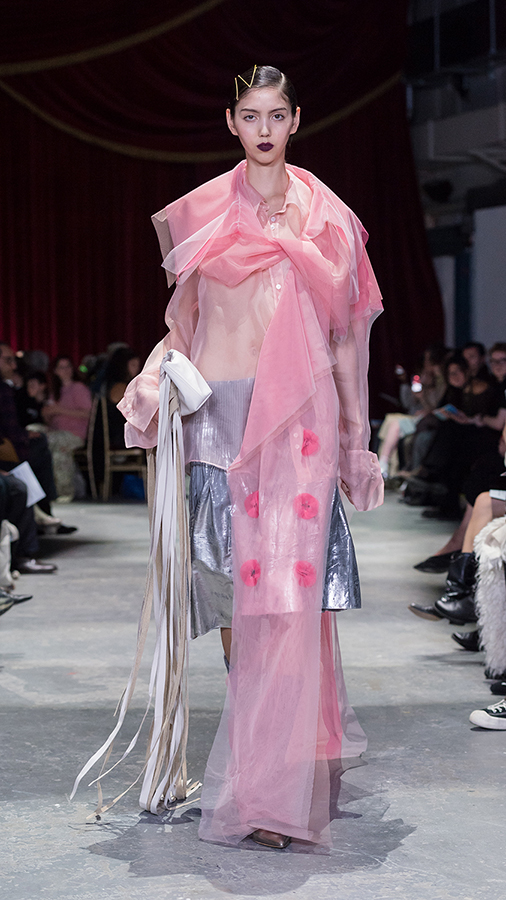
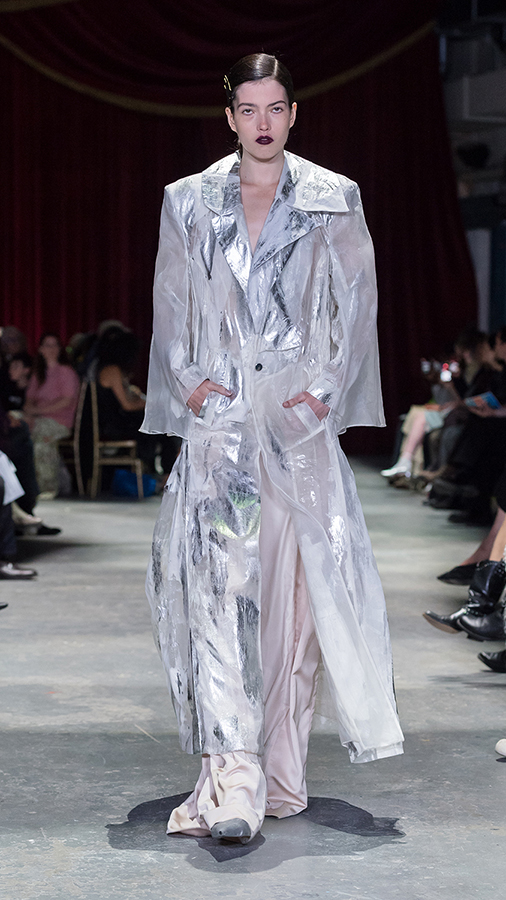
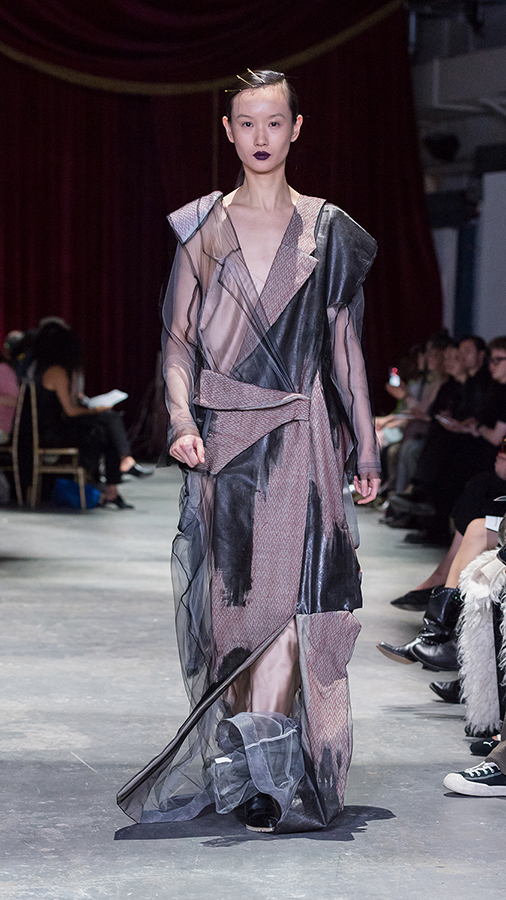
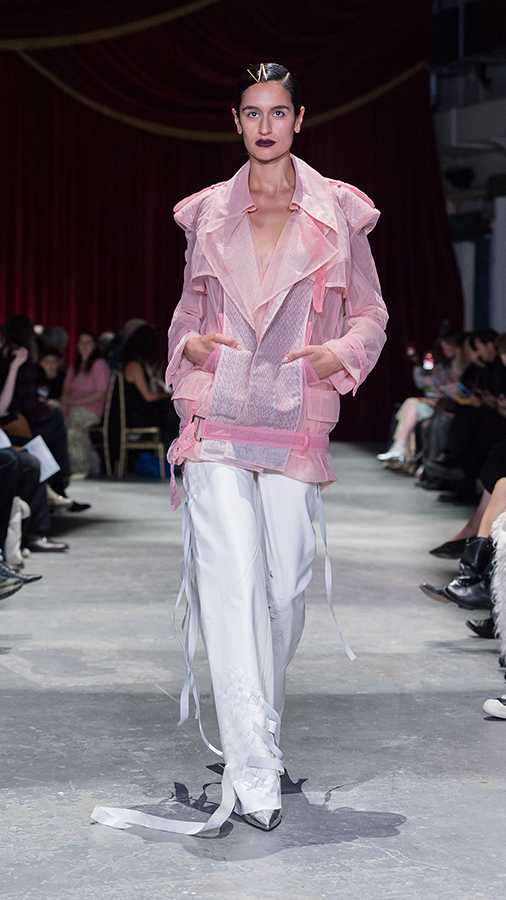
En Zhi Khoo Tailored through time.
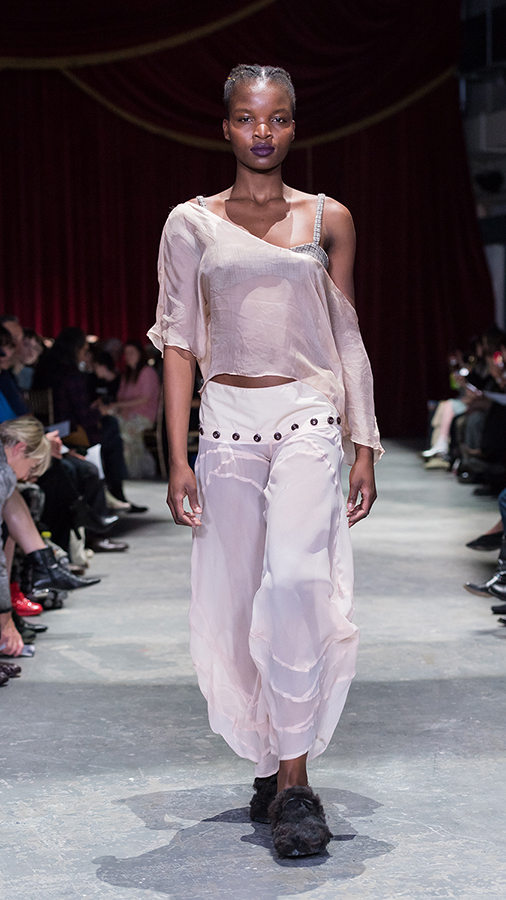
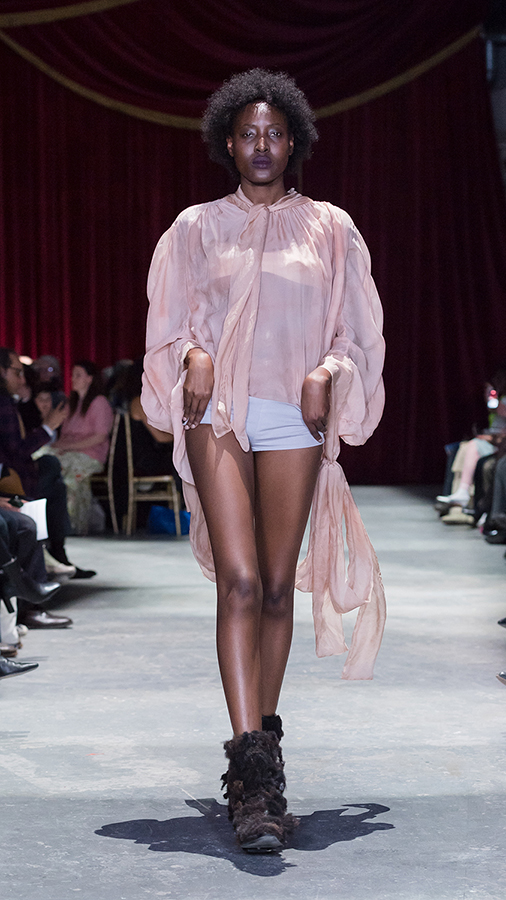
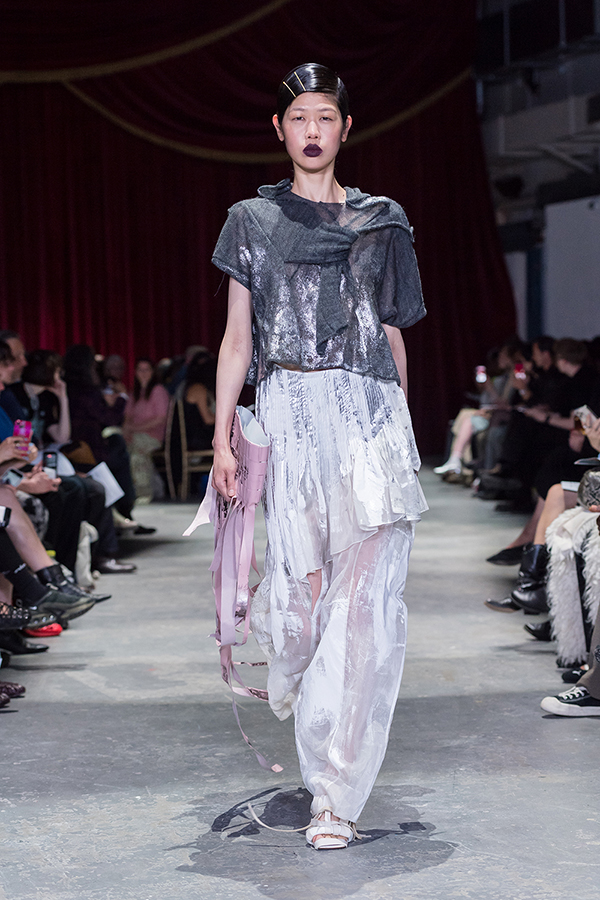
En Zhi Khoo’s beautiful womenswear collection explores many facets of identity, and how the past informs both the present and the future. Using archival and current photographs, En Zhi has studied how cultural traces continue through the thread of time, how gestures and silhouettes remain, and yet evolve.
History is something still lived and worn. Informed by structured menswear codes, she creates delicate, layered and fluid pieces in the softest shades of pink, white and silver, punctuated with charcoal grey. Identity is not fixed, and the collection reflects a meeting point, shaped through memory, layering and constant evolution.

Florence Kelk Whall Tour de Couleur
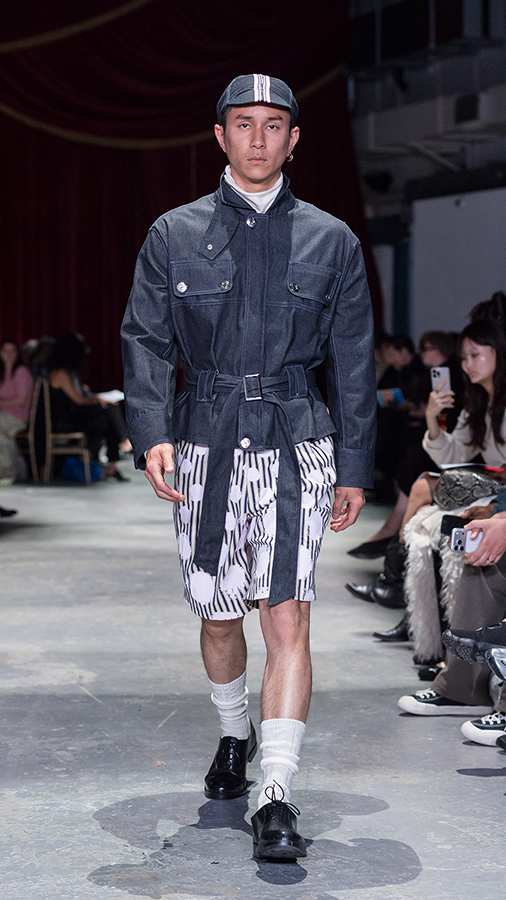
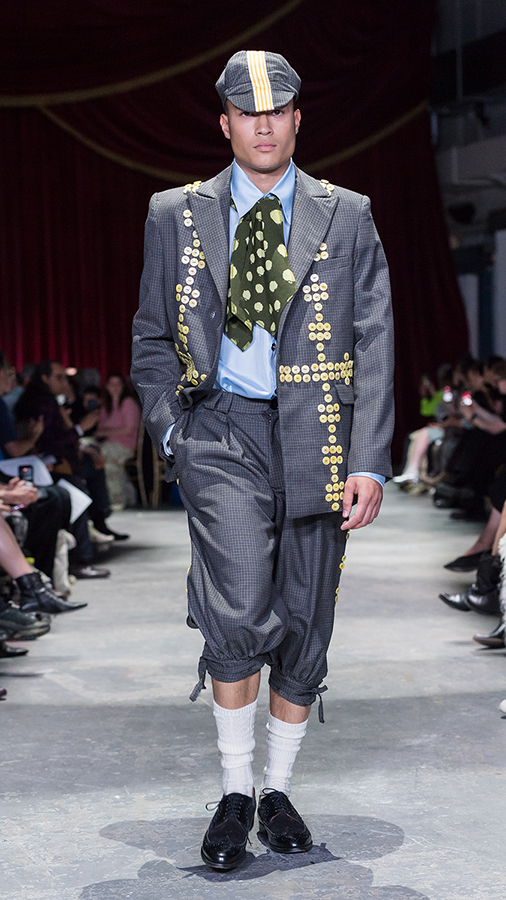
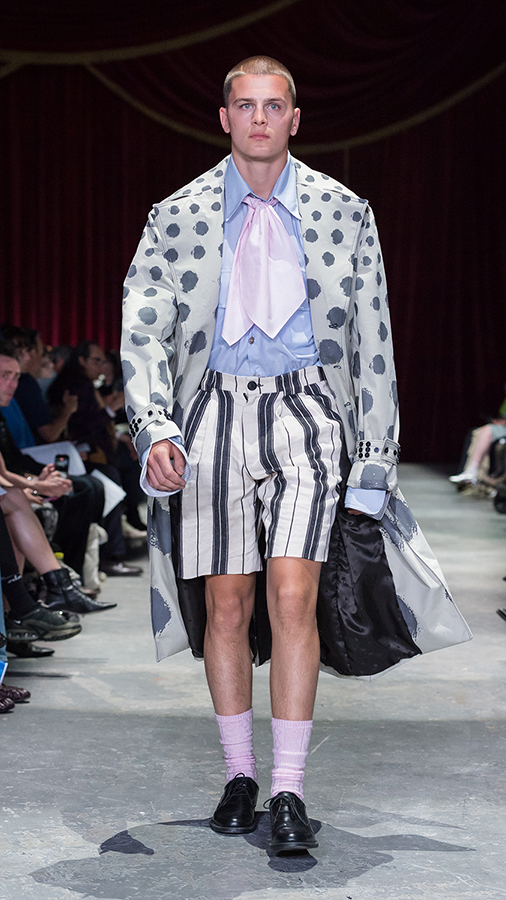
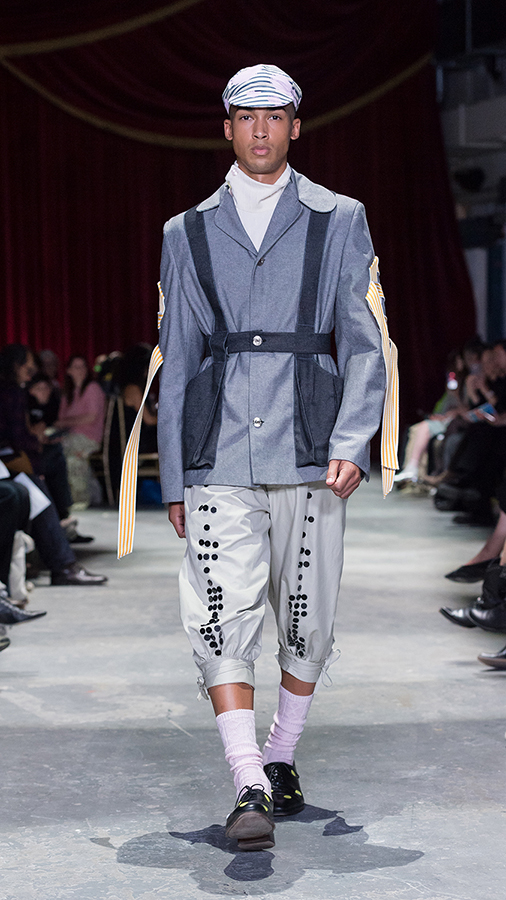
Archive images of early Tour de France events inspire Florence Kelk Whall’s delightful, light-hearted menswear collection. Reinventing vintage cycling dress, the collection captures the charm of the originals, translating key features into quirky and playful modern pieces. Deadstock fabrics have been transformed through layering, print and softened finishes to evoke garments that have been worn, repaired and passed through time.
Faded shades of stone, cream and earthy neutrals are highlighted with flashes of pink and sun-bleached yellow.
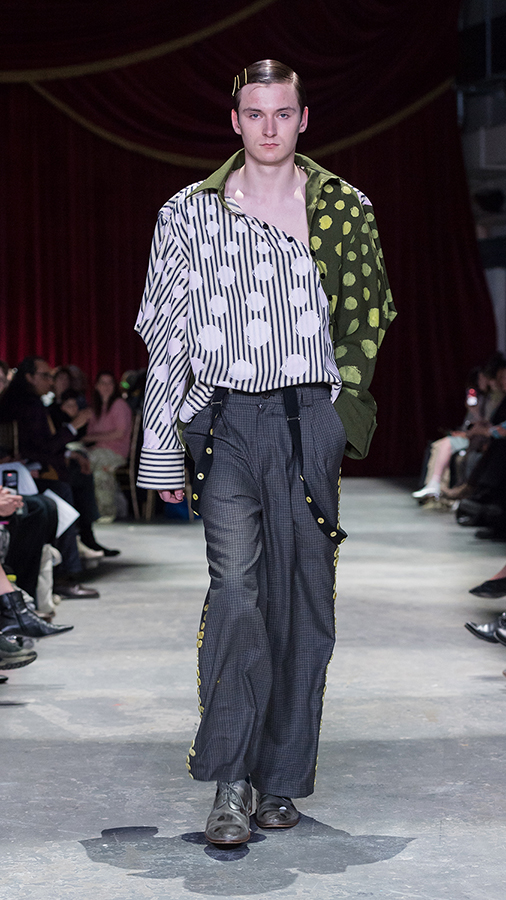
Inspired by the vulnerability and endurance of the early riders, Florence balances function with a mischievous re-working of details such as classic stripes, race lettering and ‘King of the Mountain’ polka dots, evoking the character and spirit of the pioneers.
Chienjui Tseng The Poetry of Spaces
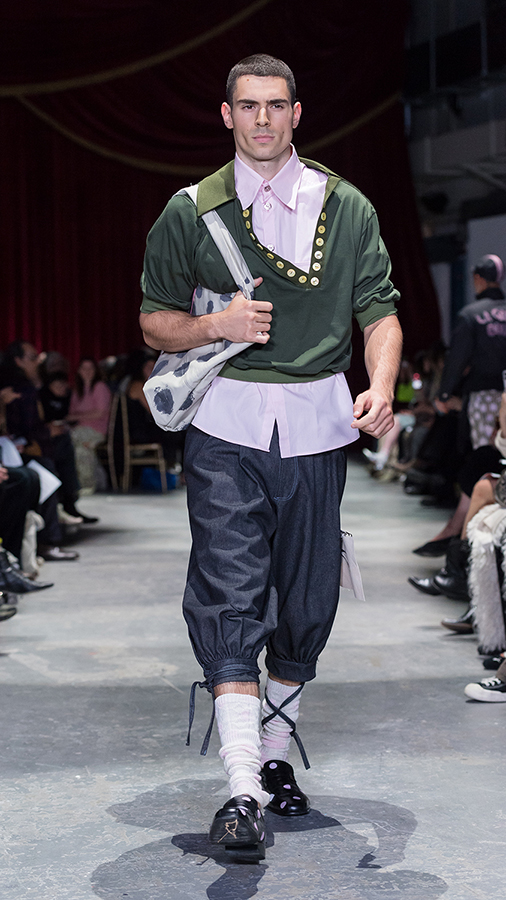
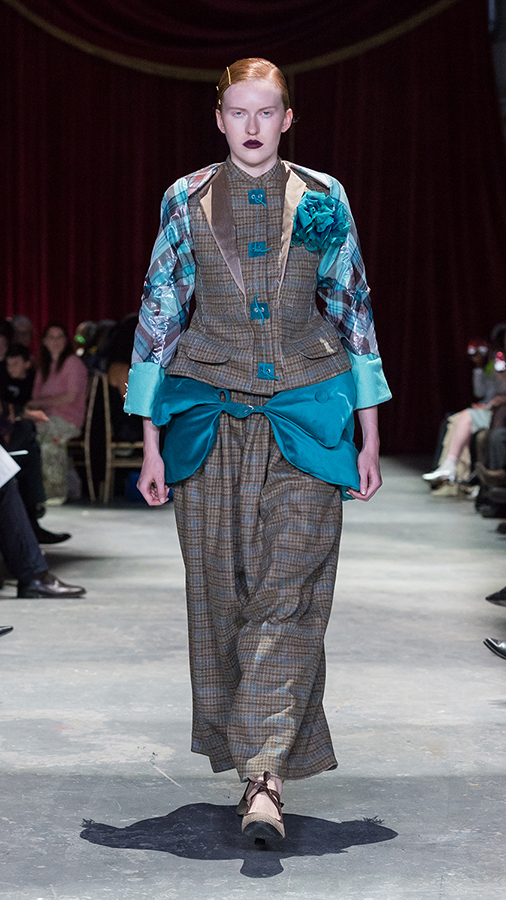
Chienjui Tseng’s complex and eclectic womenswear is primarily inspired by the three different homes she remembers. Her deeply personal response to memory and visions of home, reveals her love of textiles and material hybridisation. Geometric silhouettes are explored through draping, negotiating a balance between restrained construction and richly layered, constructed fabrics.
Informed by an internship on Savile Row, Chienjui celebrates the discipline of tailoring, but dramatically contrasts this with her inventive, hand-crafted textiles. The American artist, James Castle’s work using discarded and found materials is also a major inspiration. Working only with donated and vintage fabrics, Chienjui aims to establish a connection between clothing and spaces, striving to create a dialogue between memory and matter, residence and movement – constantly re-defining space.
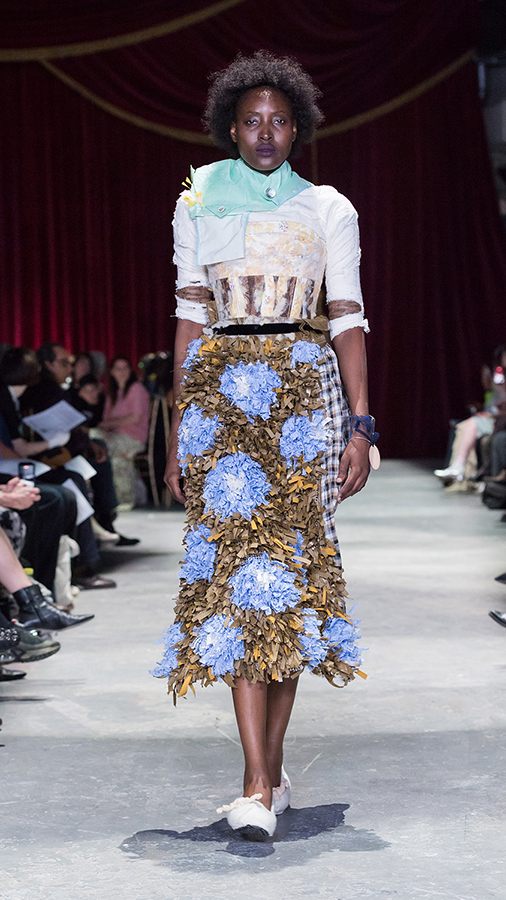
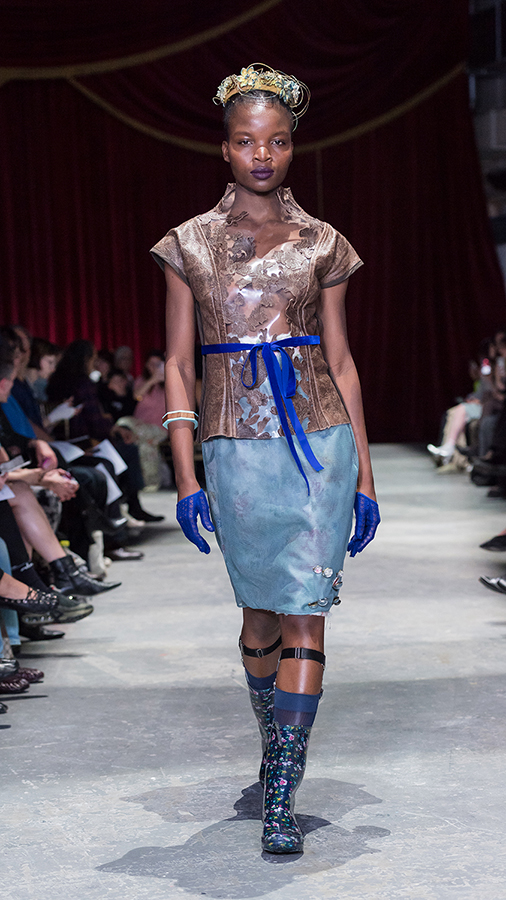
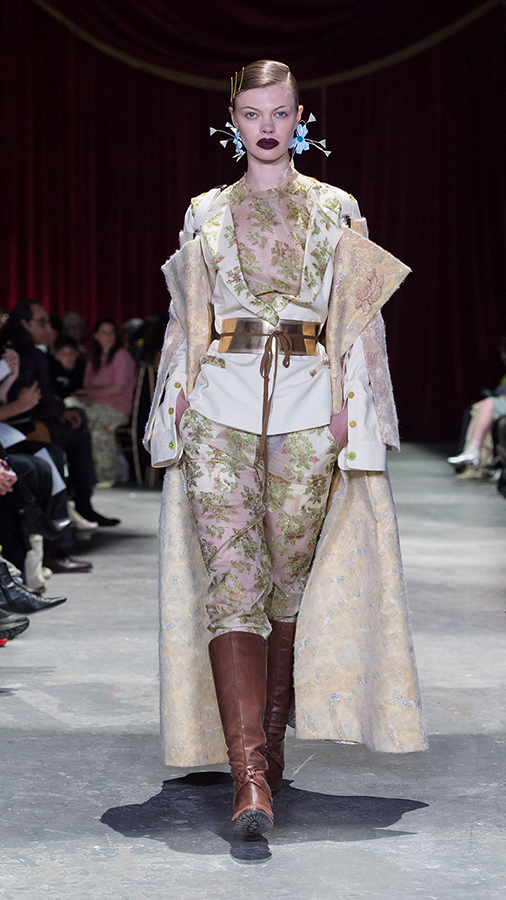
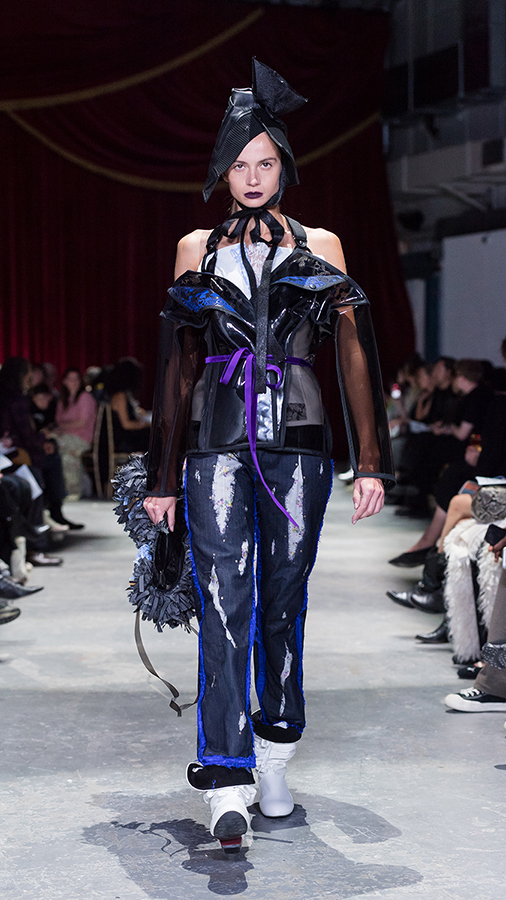
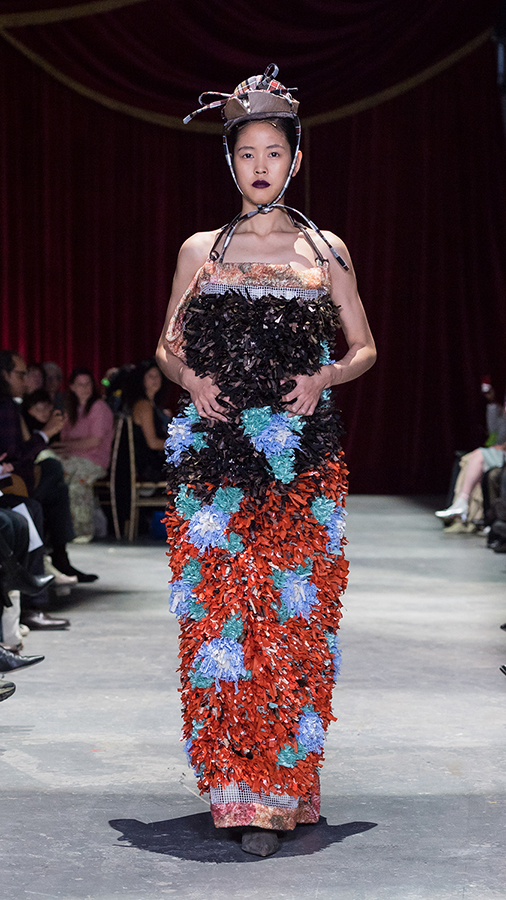
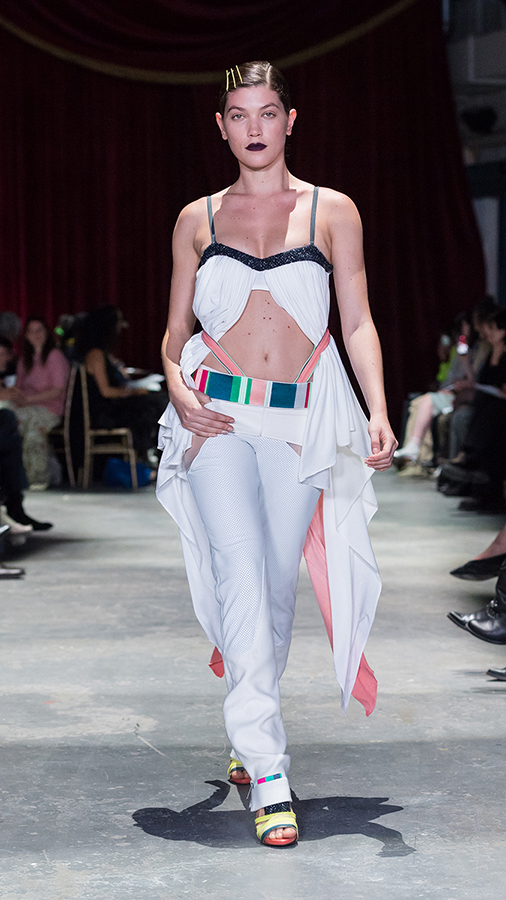
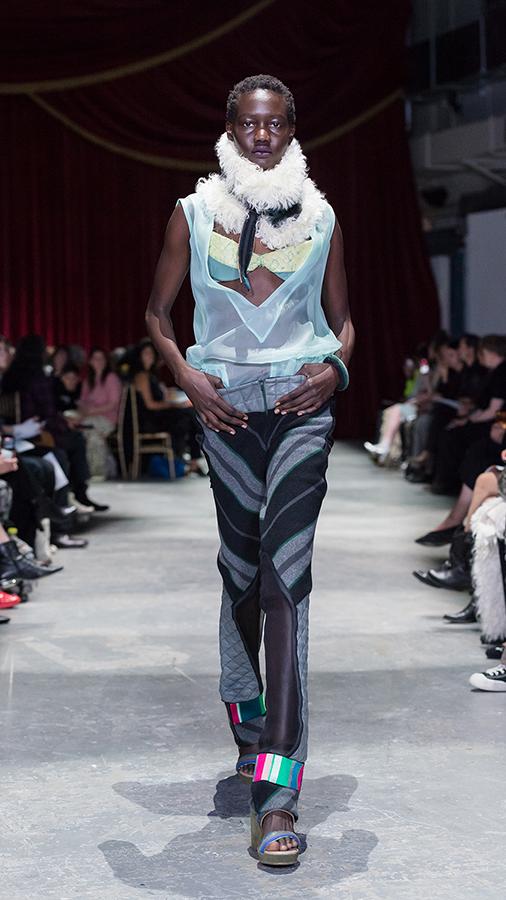
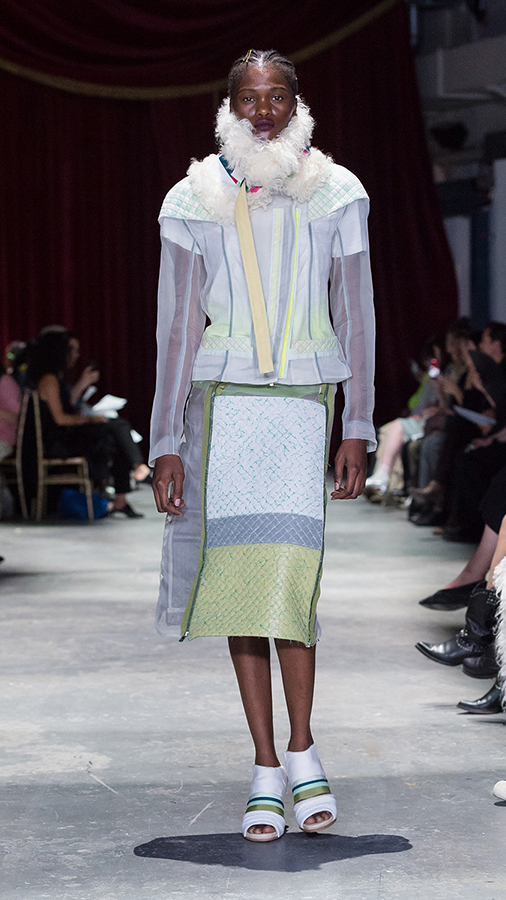
Oliver Orr Spirit Ditch
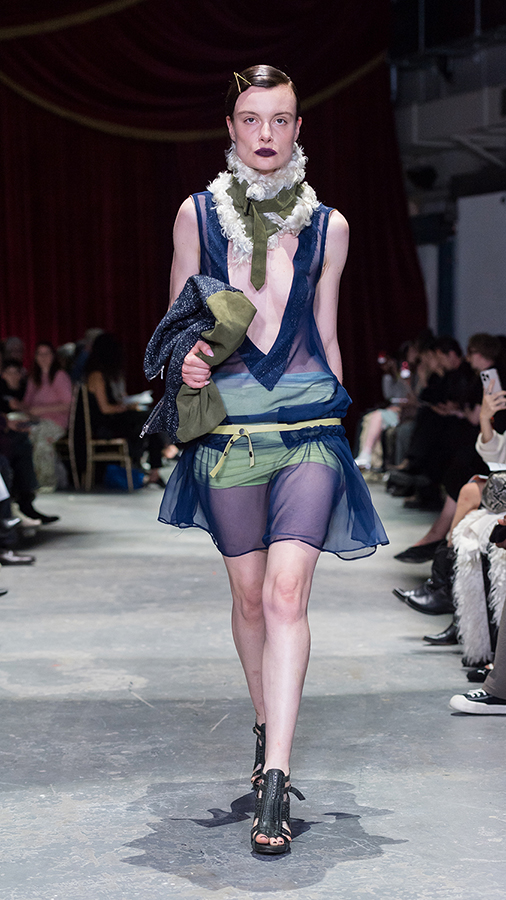
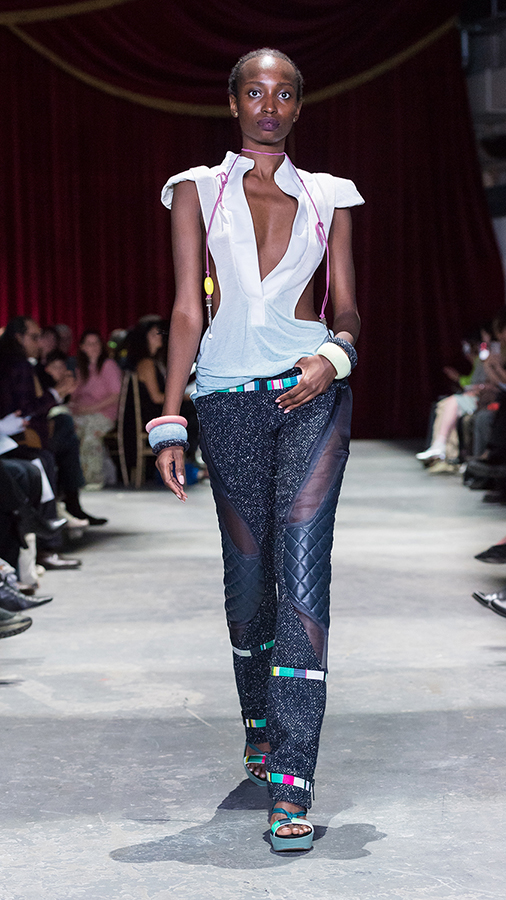
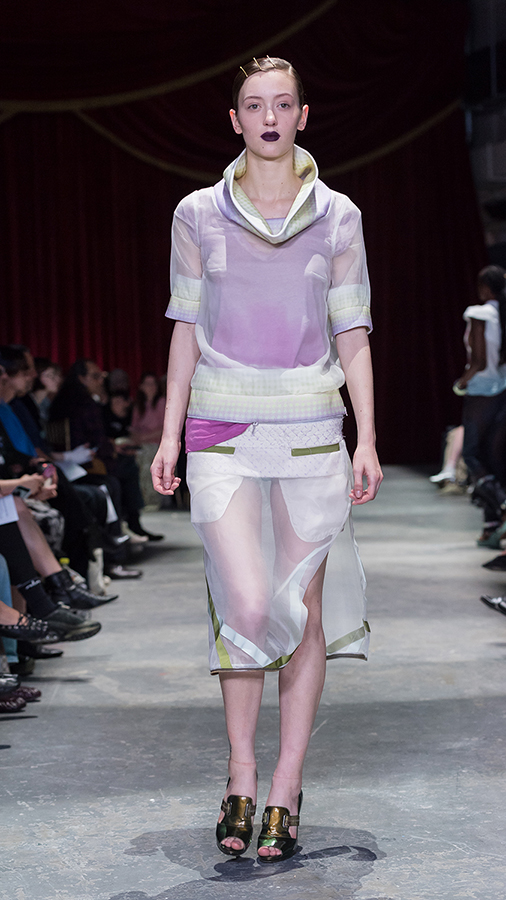
Highlighting the beauty in the mundane, and the distinctive within the ordinary, Oliver Orr’s womenswear explores human quirks and character, with inspiration drawn from the wardrobes of personal friends and the flux of city dwellers. Youthful eclecticism and awkwardness are celebrated within highly individual looks, with the interiors of garments exposed as exteriors.
Each look is inspired by a particular muse, embodying the unique disposition of the wearer. Density and fragility are interrogated using quilting as a bridge between these weights. Intentional cut-outs, experimental cutting, layering and deliberate mis-matching remain a fundamental thread throughout.
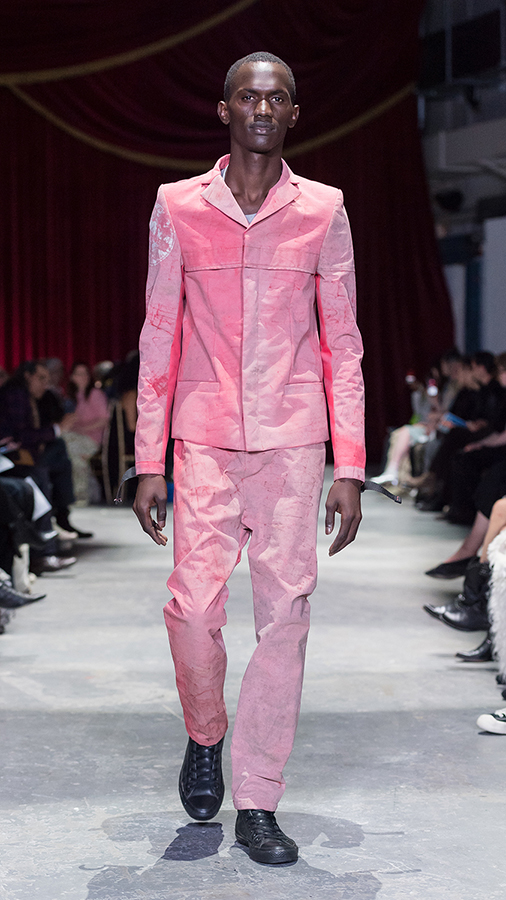
Kun Luo Remaining
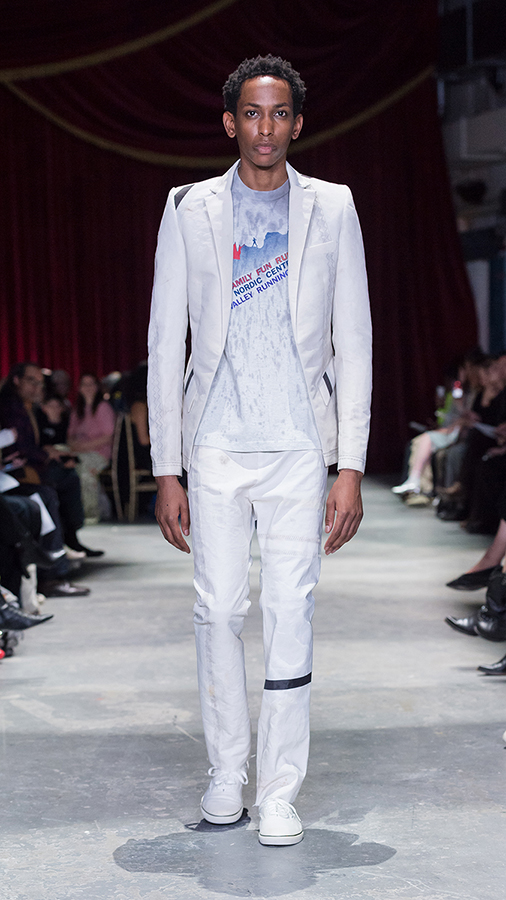
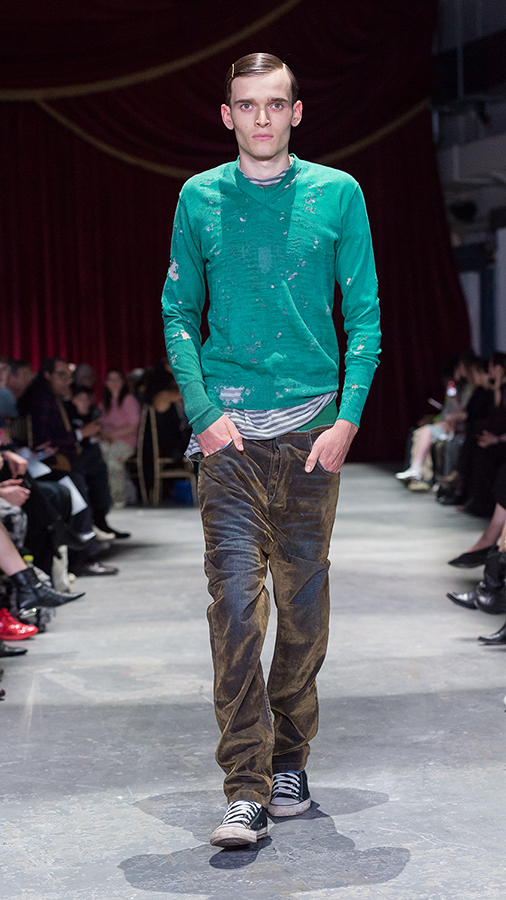
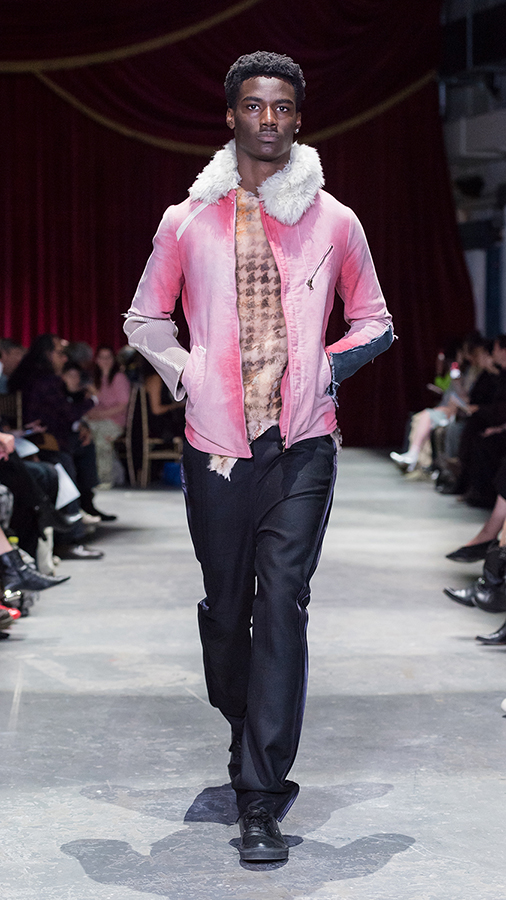
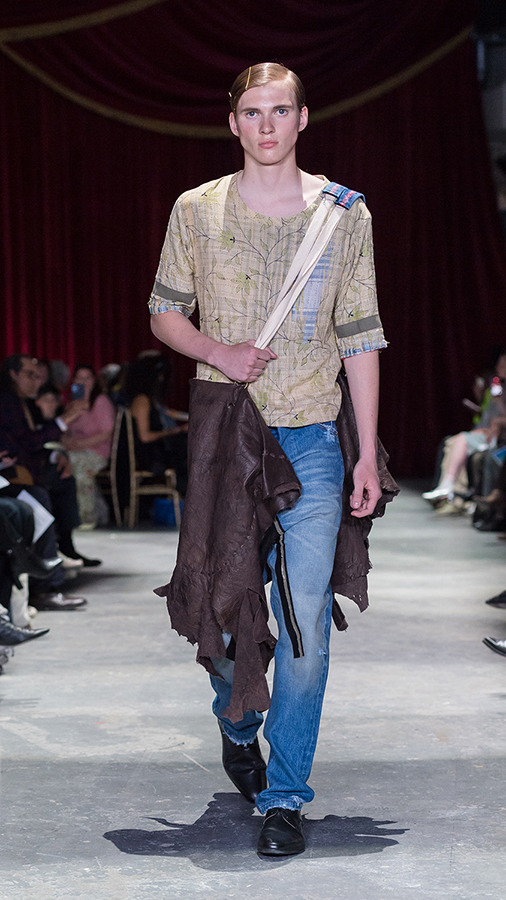
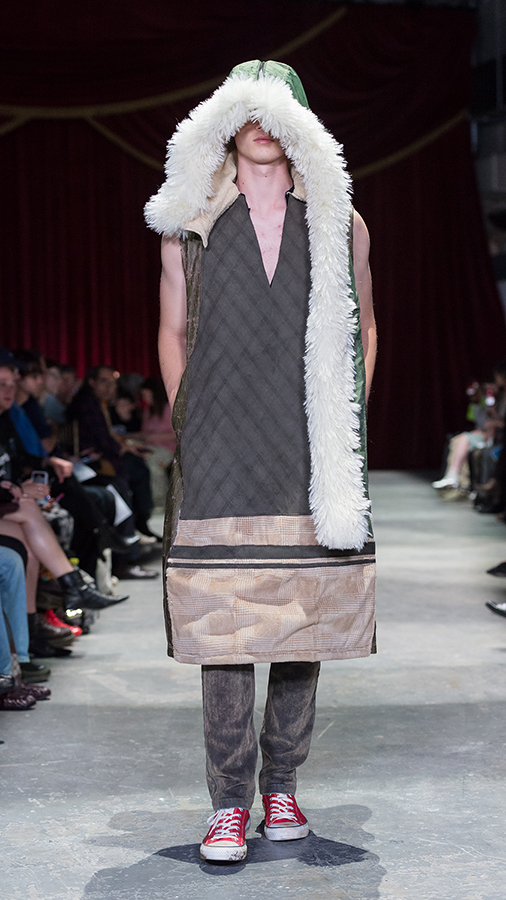
Embracing imperfection and continuity over constant replacement, Kun Luo’s low key, youthful menswear favours cool over curated. Through material experimentation Kun plays with the visible traces of time and use, creating sun-faded surfaces, needle-punched wool, singed knitwear and reconstructed denim, for a deliberately mis-matched modern wardrobe.
Worn garments evoke an emotional attachment. Tailored pieces are crafted from a weathered boat sail. Rooted in observations of teenage street culture, the collection reflects awkwardness, rebellion and attachment — where clothing becomes a way of navigating and constructing identity.
Remaining begins with what is already there.
Haeun Stemple Almost Belonging
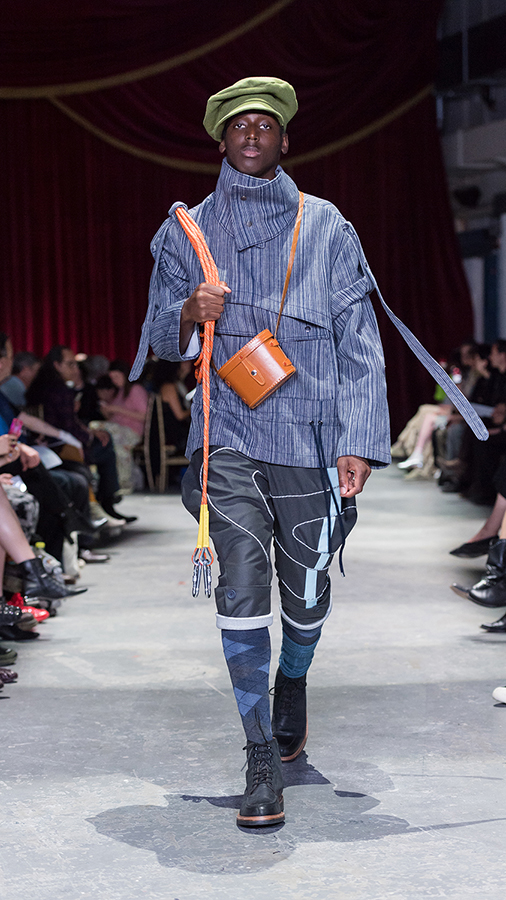
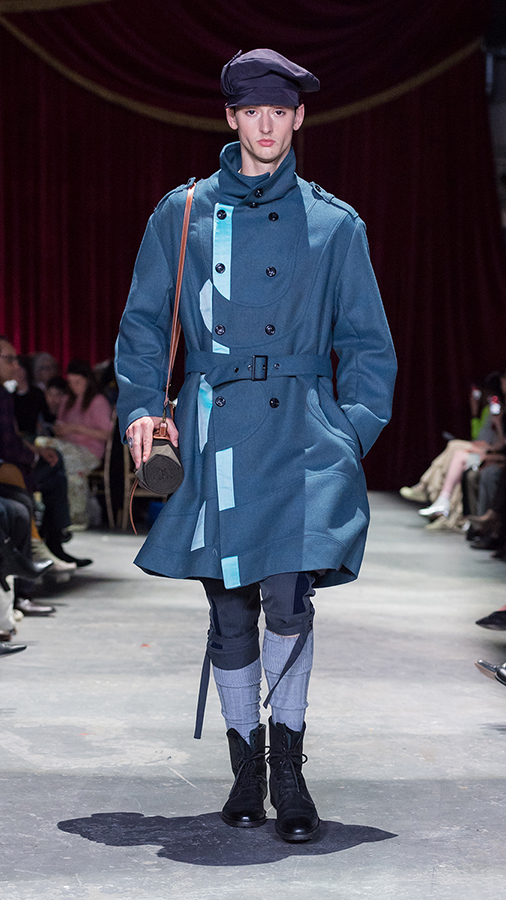
Inspired by the emotional and physical experience of navigating unfamiliar spaces, Haeun Stemple’s accomplished menswear collection reflects the temporary instability and movement of life in transition. The displaced traveller constantly adapts, but never fully belongs. These emotions are translated through intentional misaligned pattern cutting, transformable garment features and glitch-inspired puff prints. The detailing of the often-complex pieces visually document errors, amendments, revision and reflection. Layered constructions allow for shifting silhouettes, translating the experience of displacement into fluid, personal expression.

Nikyla Natividad Mabuhay (To live)
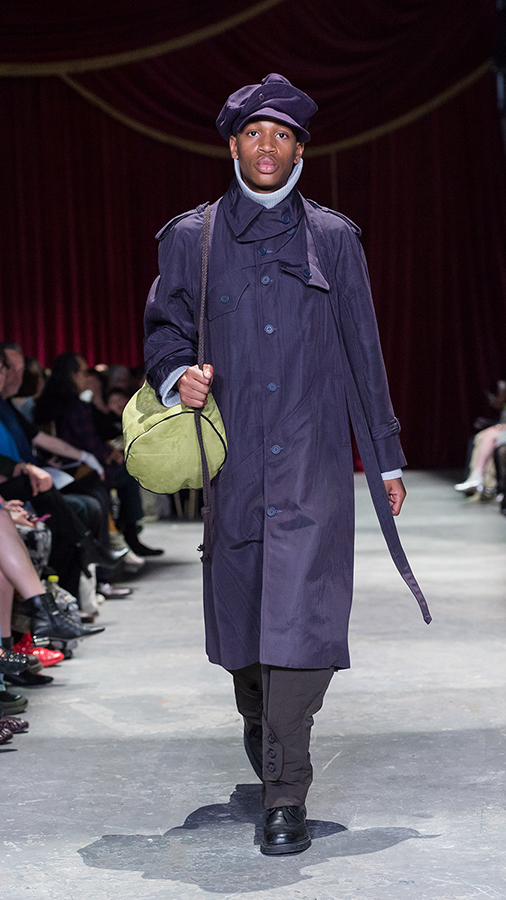
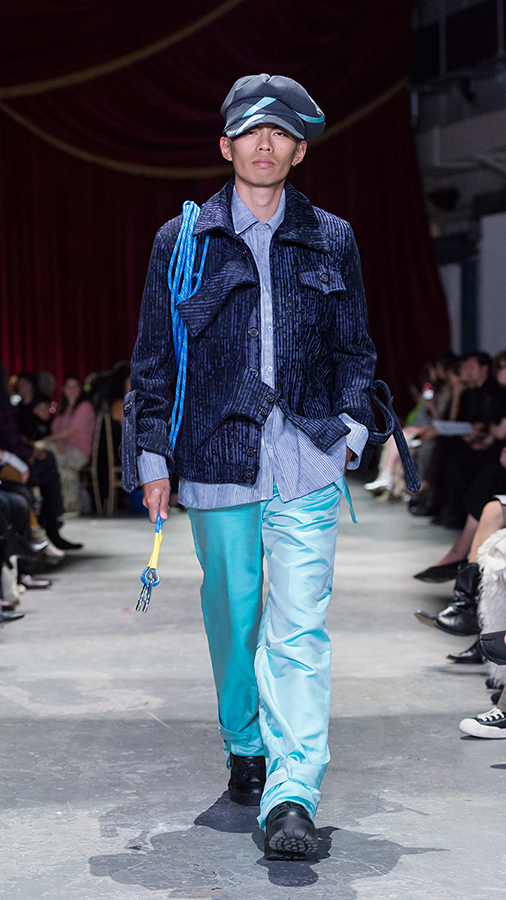
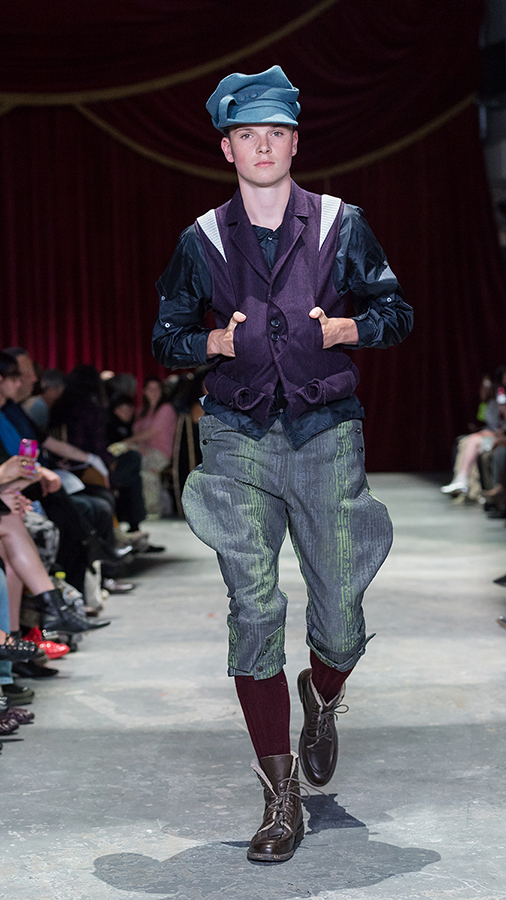
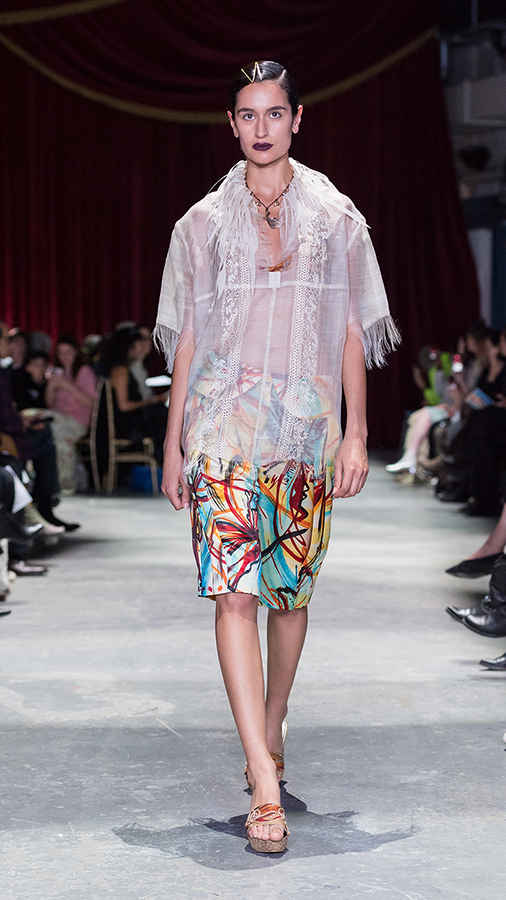
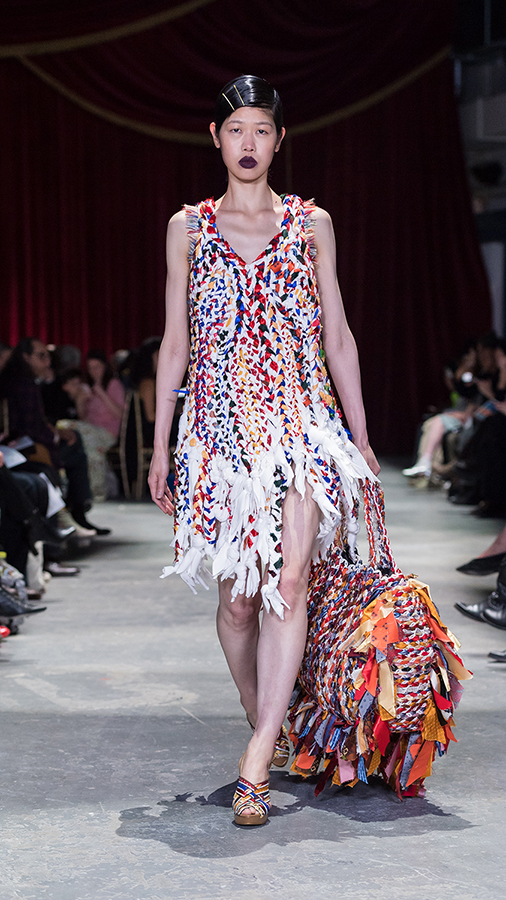
This exuberant, personal and joyful collection reflects Nikyla Natividad’s childhood memories amongst the beautiful, lush flora of the Philippines. Contrasting shapes from both historical and modern cultural silhouettes inform relaxed modern pieces, each look depicting the distinct personality of a family member.
Using photographic references of an idyllic start in a rural province, Nikyla celebrates her heritage with kaleidoscopic colour.
Mindful of the inherent resourcefulness of Filipino culture, Nikyla has used mostly donated and deadstock fabric. She harnesses local craft, utilising the traditional piña fabric, transforming the classic woven Bayong bag into a beautiful, extravagantly vibrant, modern tote.
Expressive, hand-drawn pattern is inspired by the famous ‘Sabel’ painting by Philippine National Artist, Benidicto Cabrera. Sumptuous, hand-crafted textures layer further richness into this delightful, heady mix.

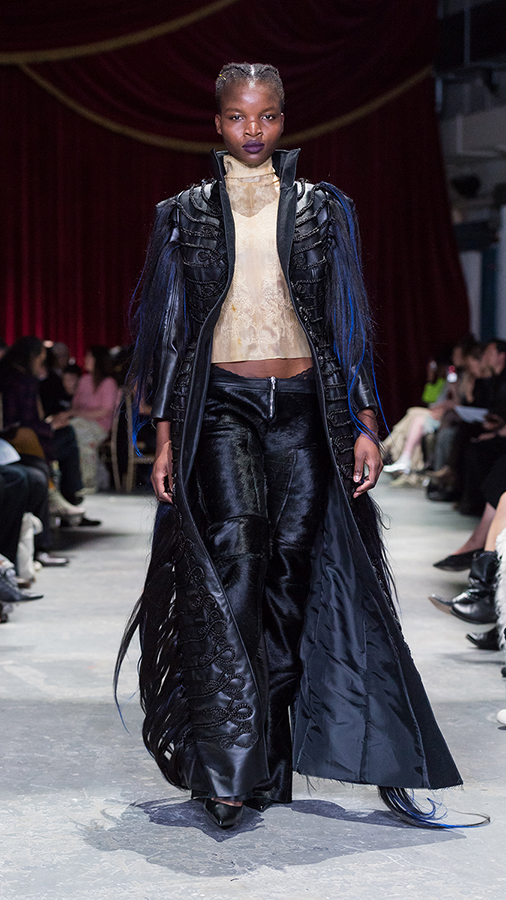
Olly Dye Hunter
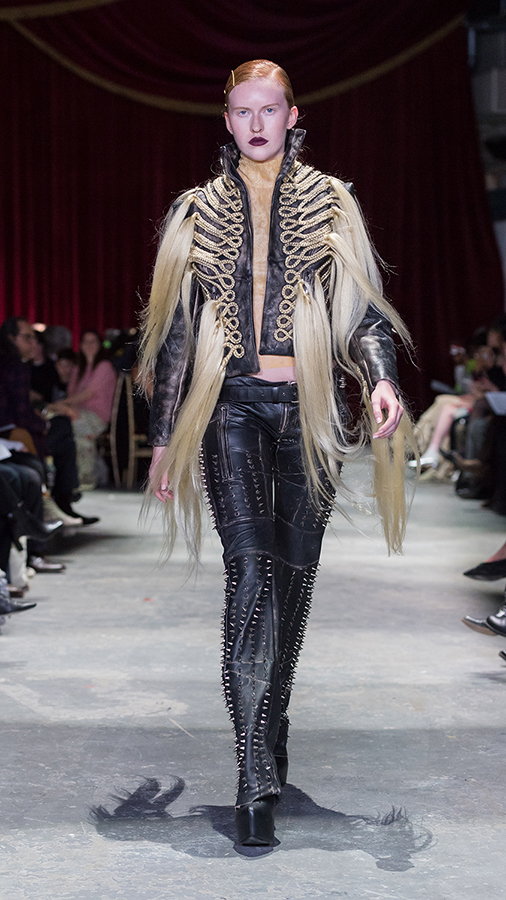
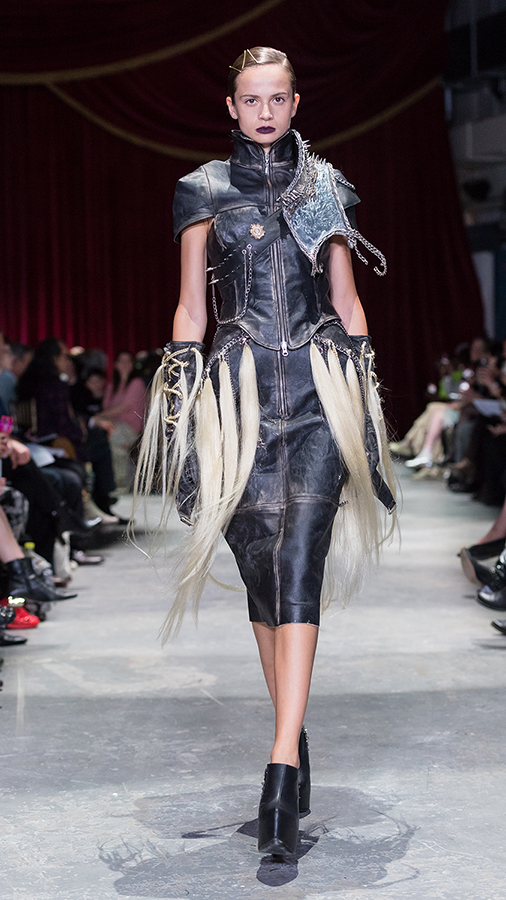
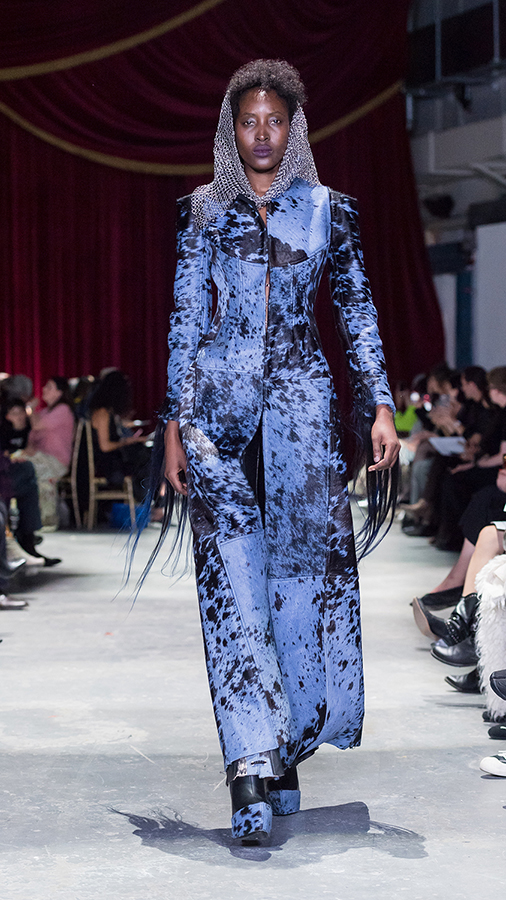
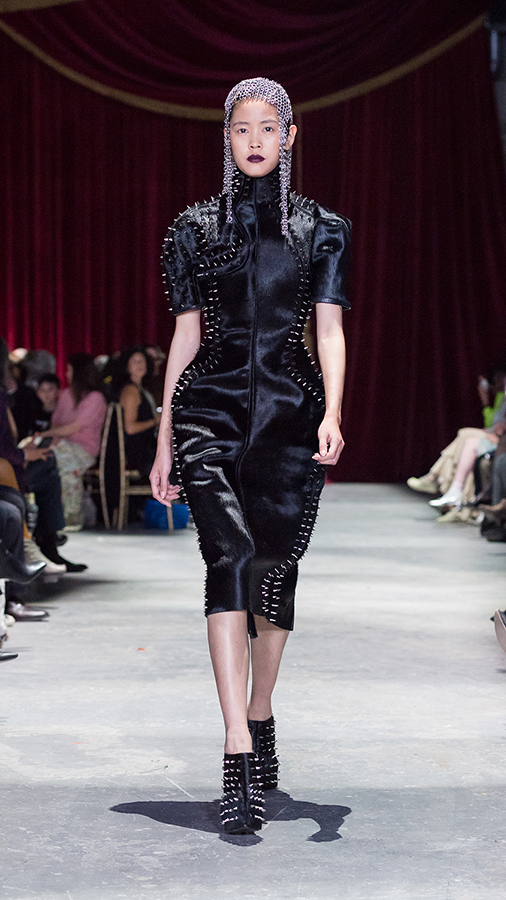
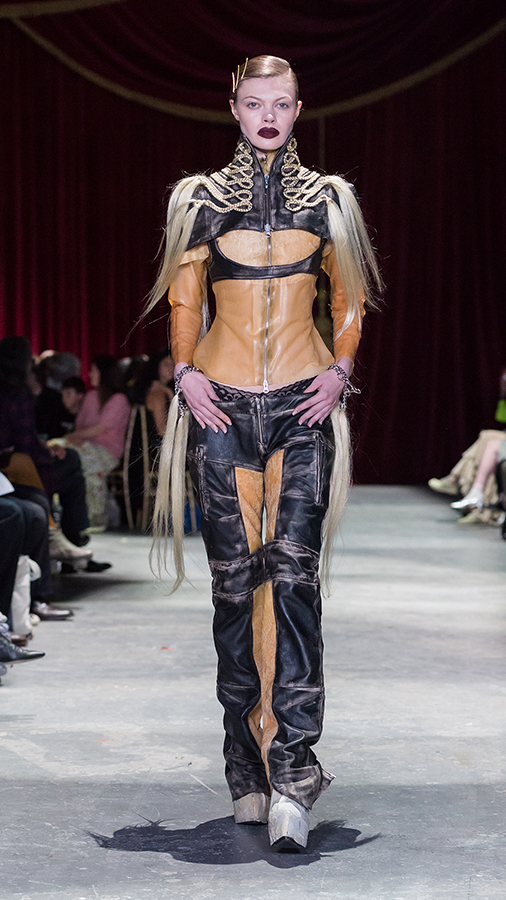
Inspired by armoured silhouettes, the military and the medieval, Olly Dye creates a truly striking collection, using leather and hair to explore notions of shielding and self-protection. Tones of black, blonde and blue are the backdrop for the decorative drama of copious hair strands. Bright, flowing hair becomes a metaphor for confidence and self-assurance — celebrated with strength and gusto. Plaited, manipulated, twisted and flowing strands adorn smooth, neat leather pieces.
Metal chains and studs hark back to a bygone age to complete this intriguing and empowering statement.
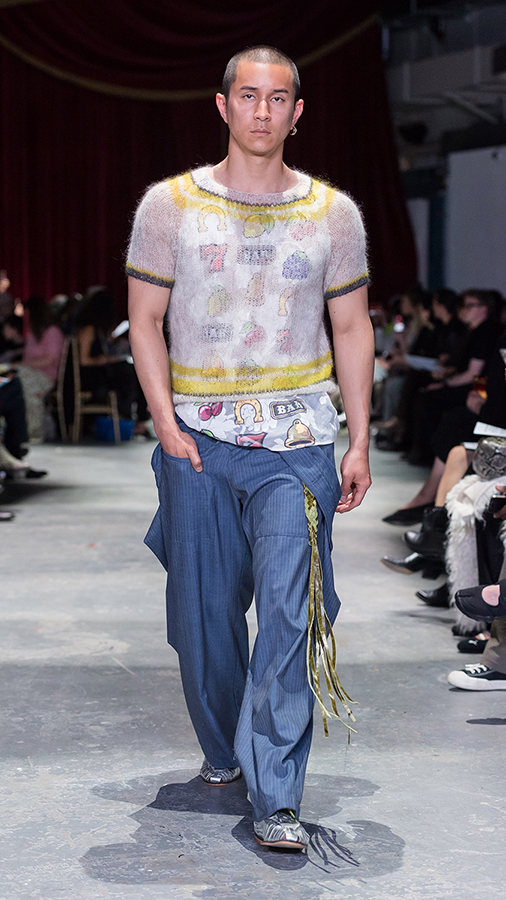
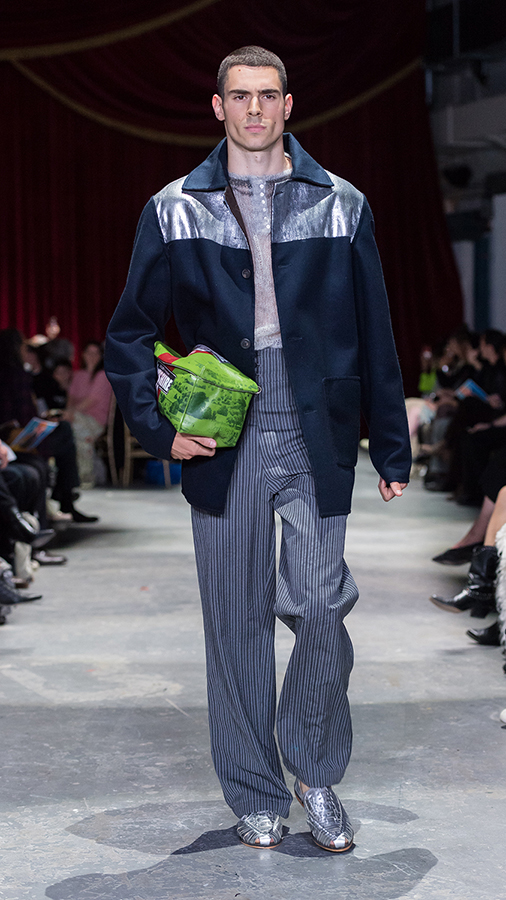
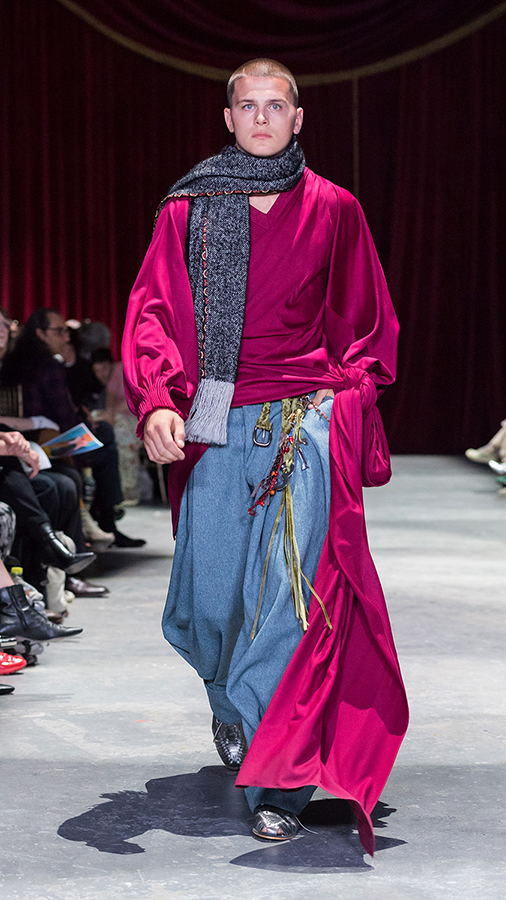
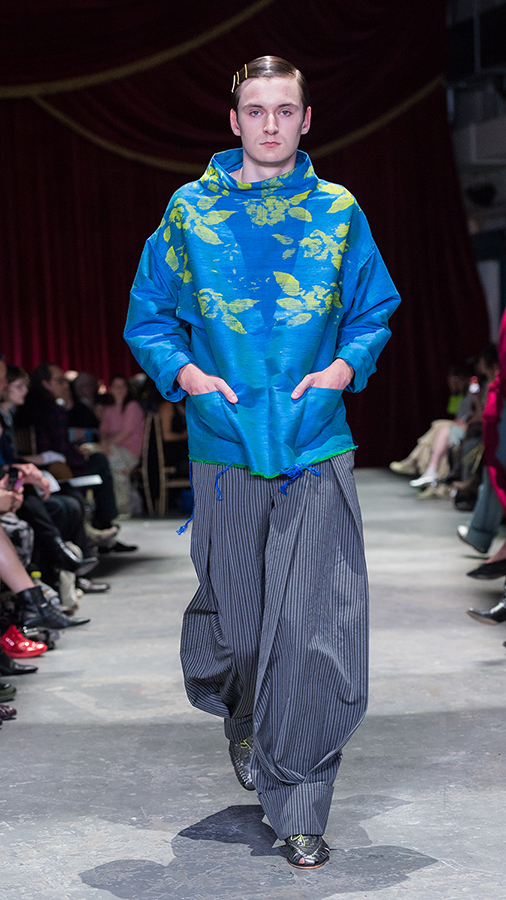
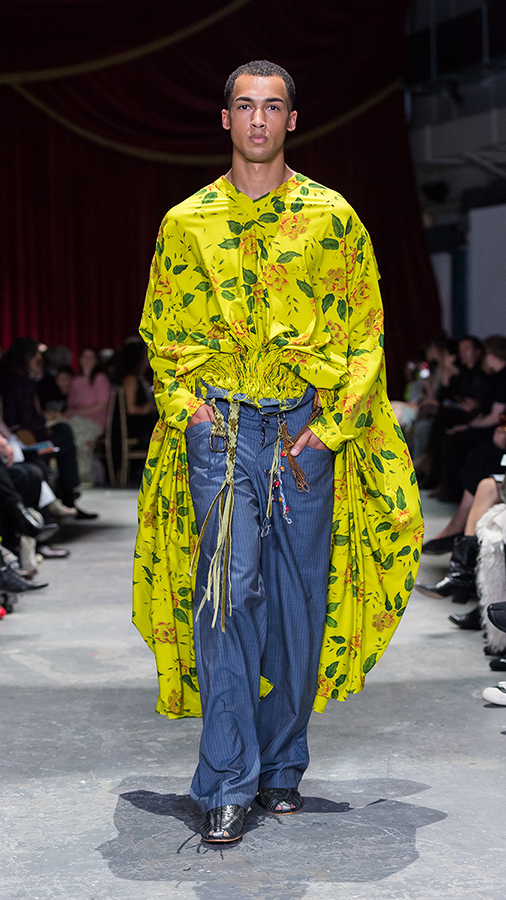
Olivia Grace Robinson I saw the innards of the fruit machine.
Olivia Robinson softens menswear with intricate bias cutting, developed back to basics. Slapped with symbols, exploiting nostalgia by leaning into fears and stereotypes, saturating these on fine silk. Elevating workwear, celebrating pride and symbolic resistance. Bringing up and bringing down. Hiding excellence in normality, raising normality to excellence.
Personal heritage is honoured with the use of sponsored wools from Yorkshire mills, and skills are honoured through a collaboration with Mumbai shoemakers. Leaving to feel what it is like to return. Labour and love. Contradiction and nuance. Silk and scraps. Silver and green. Class dysmorphia and desire. Harmony in dissonance. Push and pull. The perfect cup of tea and the constant search for balance.
London and Barnsley.
“I saw the innards of the fruit machine and all I got was this lousy T shirt”.
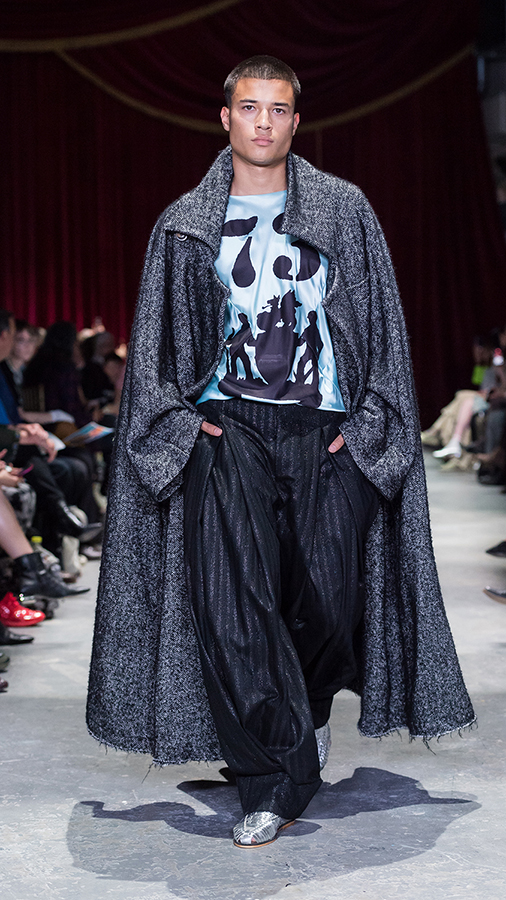
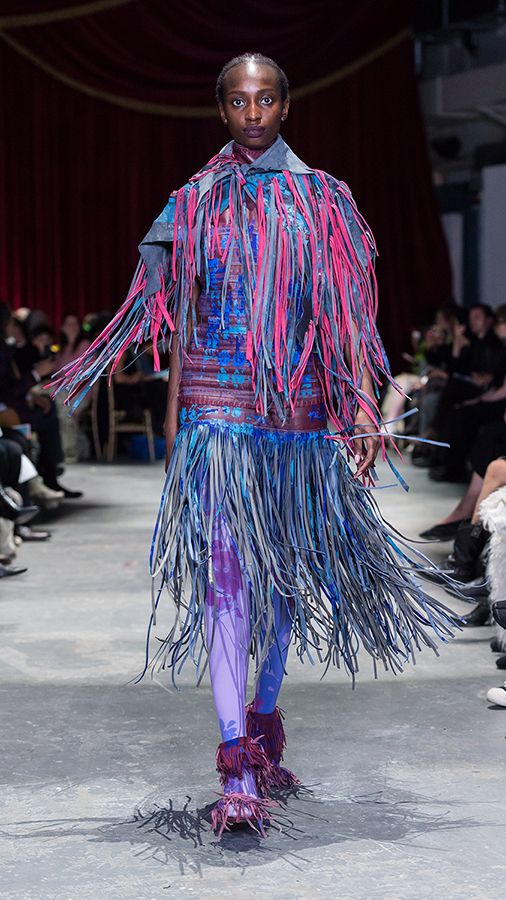
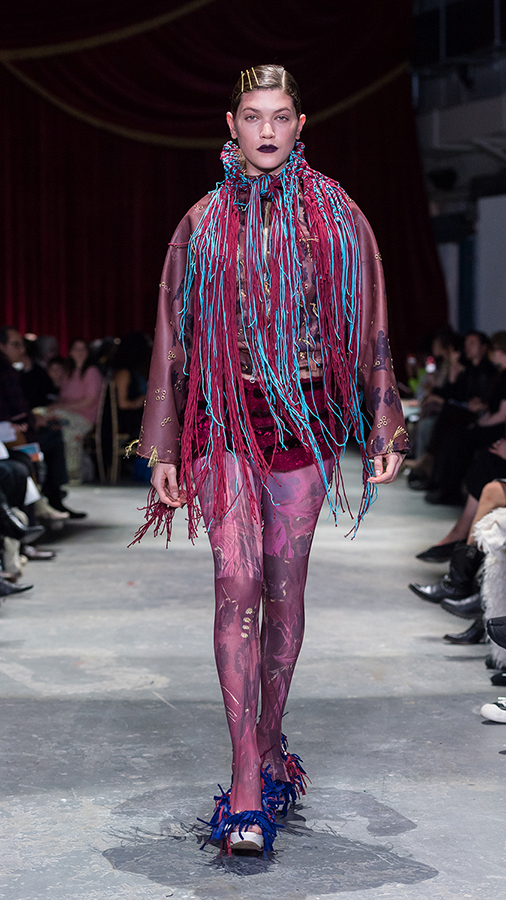
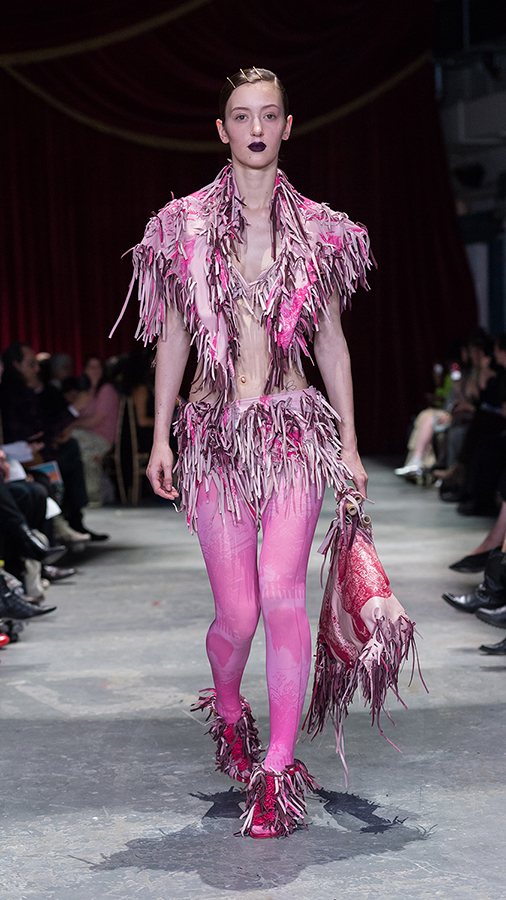
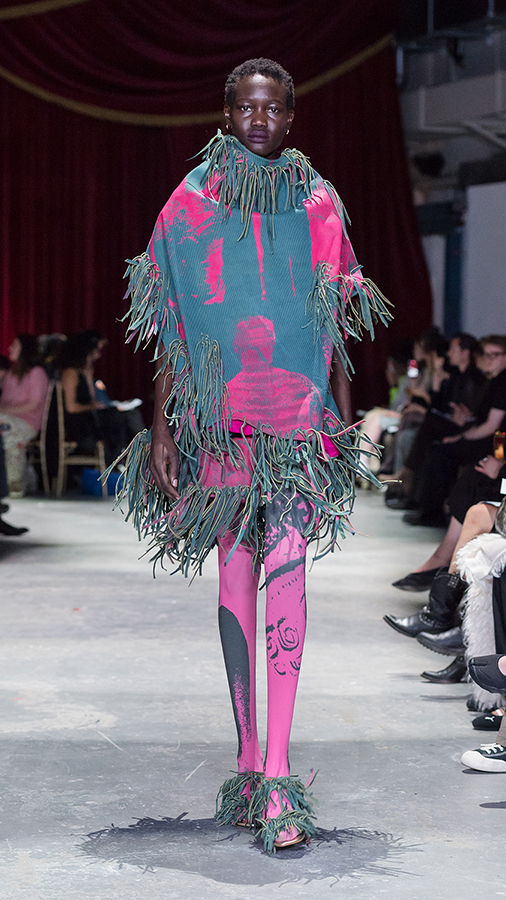
Olucci Oko Rhythms beneath the cloth.
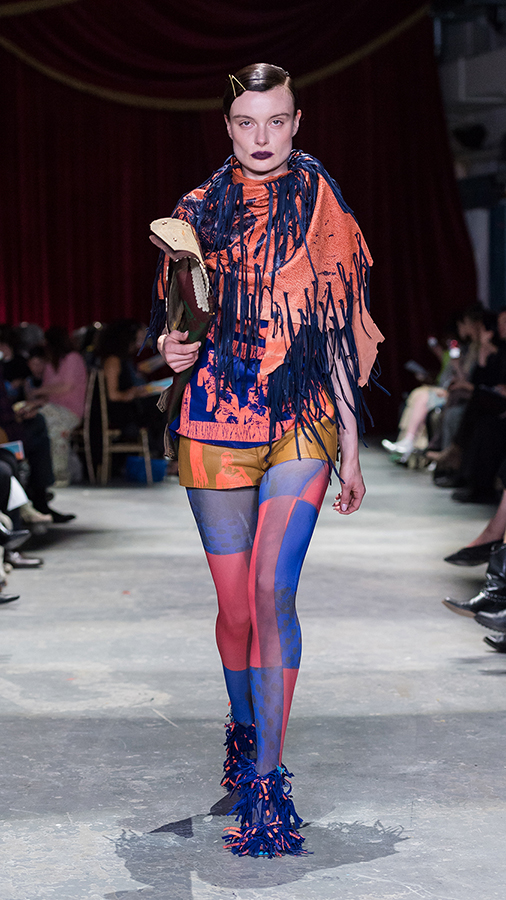
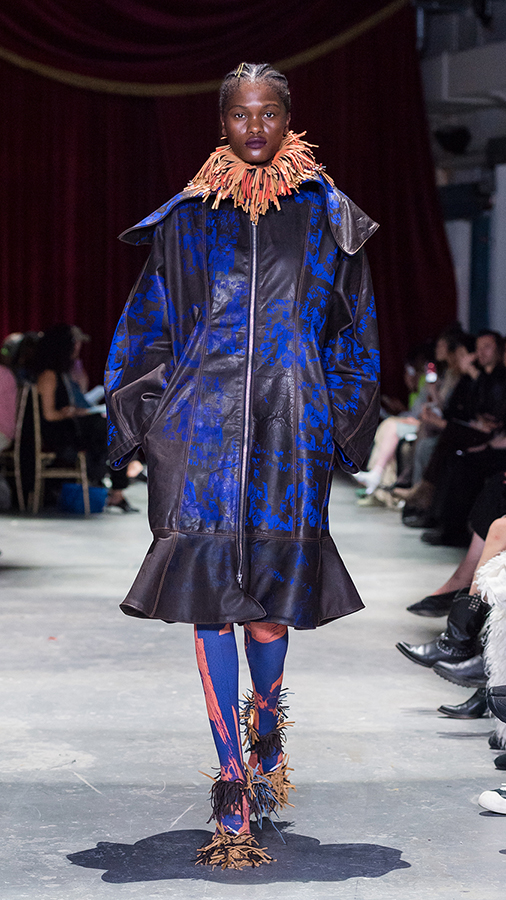
The richly layered and colourful traditions of Nigerian culture are central to Olucci Oko’s identity and her vibrant womenswear. Drawing on her heritage and the visual language of family portraits and garments, Olucci also references the expressive movement of dance and ceremonial rituals.
Zero-waste draping and use of deadstock fabrics are key. Sumptuous colour and individual prints feature throughout the collection, in warm, opulent earth and jewel tones. Luxurious textiles are layered with tactile textures adorning the body; fringing, wrapping, and weaving. Statement jewellery created from re-purposed fabric and leather completes this wonderfully harmonious, contemporary line up.
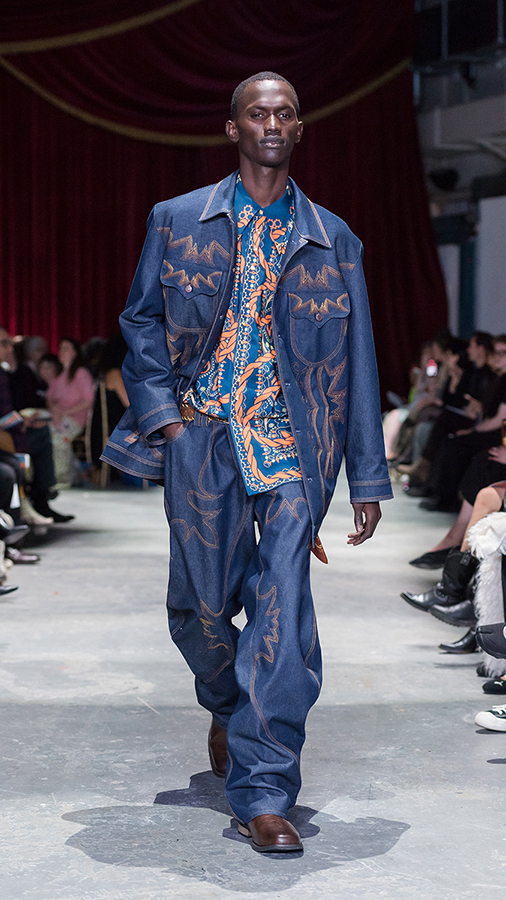
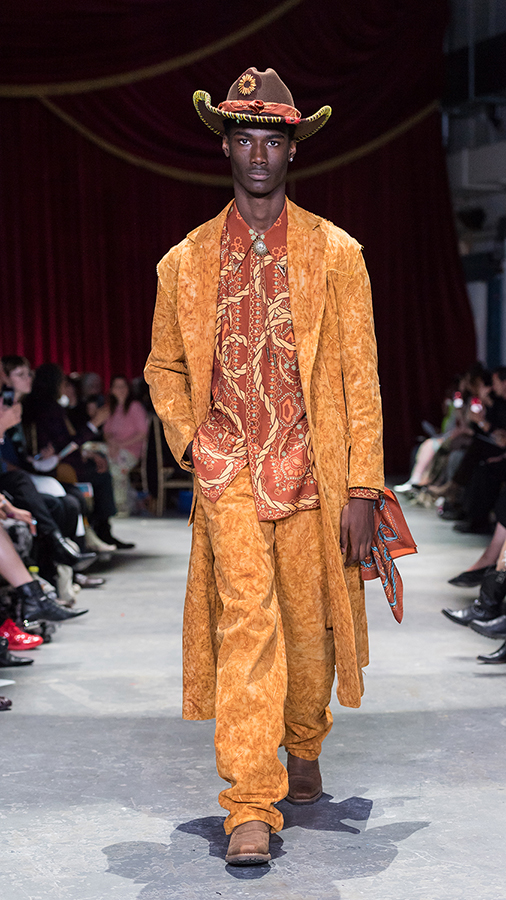
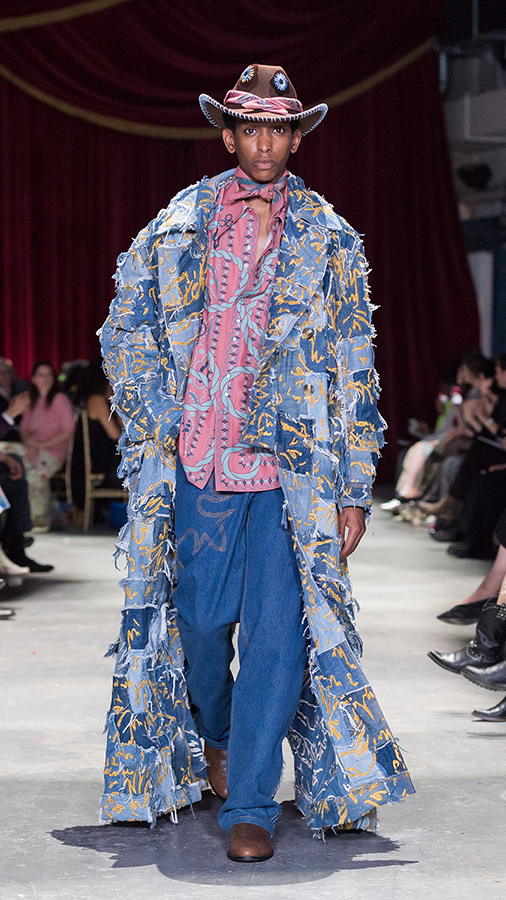
Elise Cullen So, you think you’re a cowboy?
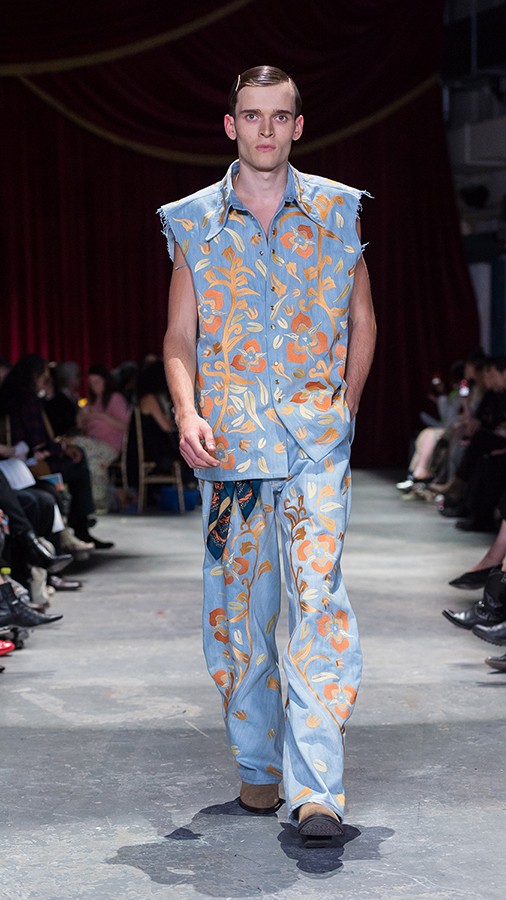
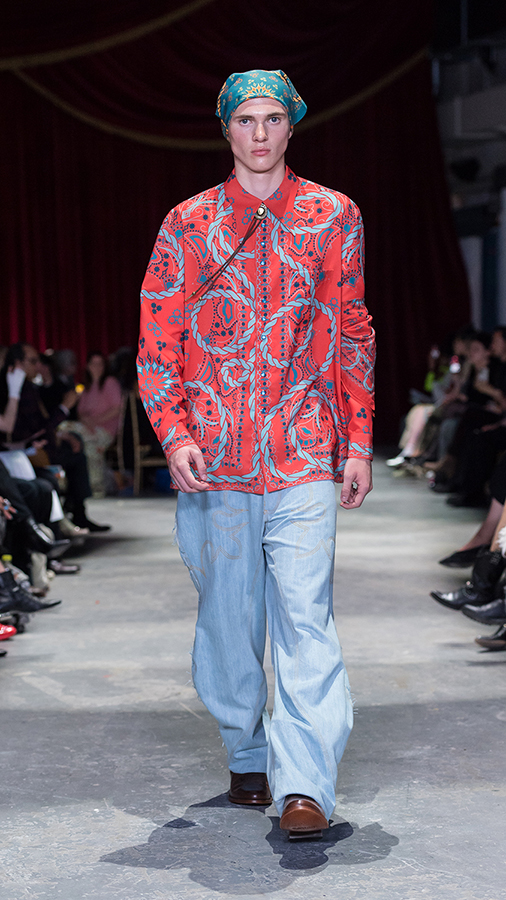
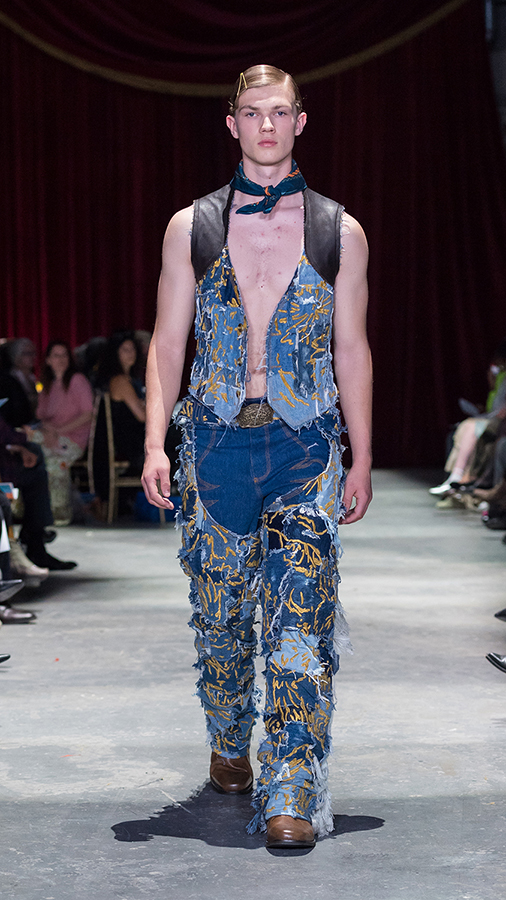
Reworking the mythology of the American West through a contemporary, critical lens, Elise Cullen pushes back against the romanticised image of cowboy culture and the performance of Western identity in her richly colourful, desirable menswear.
Playfully calling out those who adopt the aesthetic without any lived connection, she questions ideas of authenticity and storytelling in fashion. Grounded in sustainability, each intricately detailed and thoughtful look is created from second-hand fabrics or deadstock denim. Playful and experimental techniques include a naturally rust-dyed look that introduces themes of wear, decay, and inventive resourcefulness.
WITH THANKS,
Ahluwalia, All Saints, British Fashion Council, Burberry, Drakes, Dugdale, Dunhill, Fashionary, Inditex, JW Anderson, Joel & Sons, Lavenham, Leathersellers, M&ES London, McQueen, Rapha, Simone Rocha, Sweaty Betty, Vivien of Holloway.
Prof. Peter Bonfield, Prof. Catherine Dormer, Virginia Grose, Caroline Curtis, Troy Fearne, Paolo Carzana, Stephanie Cooper, Sarah Mower.